


Ghana’s ambitious Big Push Initiative has been widely praised as a game-changing investment in national development, but experts are calling for urgent, people-centred reforms to ensure that the massive road construction drive delivers lasting benefits without compromising public safety, health, and community wellbeing.
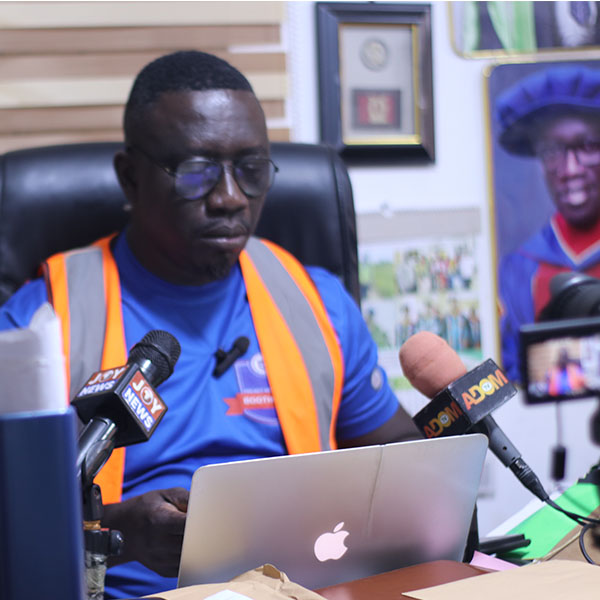
A senior project engineering expert, Engr. Surv. Dr. Dr. Ebenezer Gyamera, has commended the President of the Republic John Mahama for the bold vision behind the initiative, describing it as one of the most significant infrastructure interventions in the country’s history. However, he cautions that the success of the Big Push will ultimately be measured not just by kilometres of roads constructed, but by how responsibly, safely, and sustainably these projects are delivered.
In a press statement dated December 26, 2025, Dr. Gyamera—who is the Southern Sector Chairman of the Institution of Engineering and Technology (IET) Ghana and a Senior Lecturer at the University of Cape Coast—emphasized that proactive project management reforms are critical to protecting communities, preserving national assets, and sustaining public confidence in the programme.
He outlined several pressing concerns that, if left unaddressed, risk undermining the social and economic gains of the Big Push:
1. Dust Pollution and Public Health
Dr. Gyamera warned that uncontrolled dust from extensive earthworks poses a serious public health threat, particularly in urban and peri-urban communities. He noted that prolonged exposure contributes to respiratory illnesses, disrupts livelihoods, and lowers overall quality of life. He called for mandatory water spraying, strict enforcement of environmental management plans, and tougher monitoring of contractors, stressing that public health must not become collateral damage of development.
2. Utility Lines and Service Disruptions
The expert raised concern over repeated disruptions to essential services such as water, electricity, fiber optics, and sewer systems during road construction. He advocated for stronger pre-construction coordination with utility providers and accurate utility mapping, arguing that avoidable service interruptions erode public trust and increase project costs.
3. Alternative Routes and Traffic Management
Describing traffic congestion during road works as a daily burden for commuters and businesses, Dr. Gyamera called for clearly defined and properly maintained alternative routes, supported by effective signage and public information campaigns. He stressed that poor traffic management during construction reflects weak project planning and must be corrected.
4. Pedestrian Crossings and Road Safety
Dr. Gyamera expressed deep concern about the safety of residents in communities where road projects pass through densely populated areas. He warned that the lack of pedestrian crossings exposes children, the elderly, and persons with disabilities to unacceptable risks. He called for the mandatory inclusion of footbridges, zebra crossings, walkways, and traffic-calming measures in all applicable road projects.
5. Protection of Surveying Pillars and Geodetic Controls
The statement highlighted the frequent destruction of national survey pillars and geodetic control points, describing it as a silent but costly loss to the nation. Dr. Gyamera stressed that these are critical national assets for land administration and future infrastructure development, and called for compulsory collaboration with licensed surveyors and the Lands Commission to safeguard or re-establish them during construction.
6. Stakeholder Engagement and Community Relations
According to Dr. Gyamera, meaningful development cannot succeed without the people. He advocated for early, continuous, and transparent engagement with traditional authorities, local assemblies, professional bodies, and affected communities. Clear communication on timelines, compensation, access, and safety measures, he noted, is essential to reducing conflicts and strengthening public ownership of the Big Push Initiative.
Despite these concerns, Dr. Gyamera reaffirmed his strong support for the government’s infrastructure agenda, pledging the backing of professional bodies and allied experts to help ensure that the Big Push is executed to the highest standards of safety, sustainability, and professionalism.
Meanwhile, the Chairperson of Women in Engineering at IET Ghana, Engr. Mrs. Adjoa Aginba Tetteh Gyamera, used the opportunity to advocate for greater inclusion of women in the Big Push projects. She urged contractors and government agencies to deliberately increase female participation, noting that women now form a growing segment of Ghana’s engineering workforce. Encouraging their involvement, she said, is not only a matter of equity but also a strategic advantage, given women’s strong attention to detail, discipline, and technical competence.

As Ghana accelerates its infrastructure drive, experts insist that development must not only be fast—it must be fair, safe, and sustainable.