


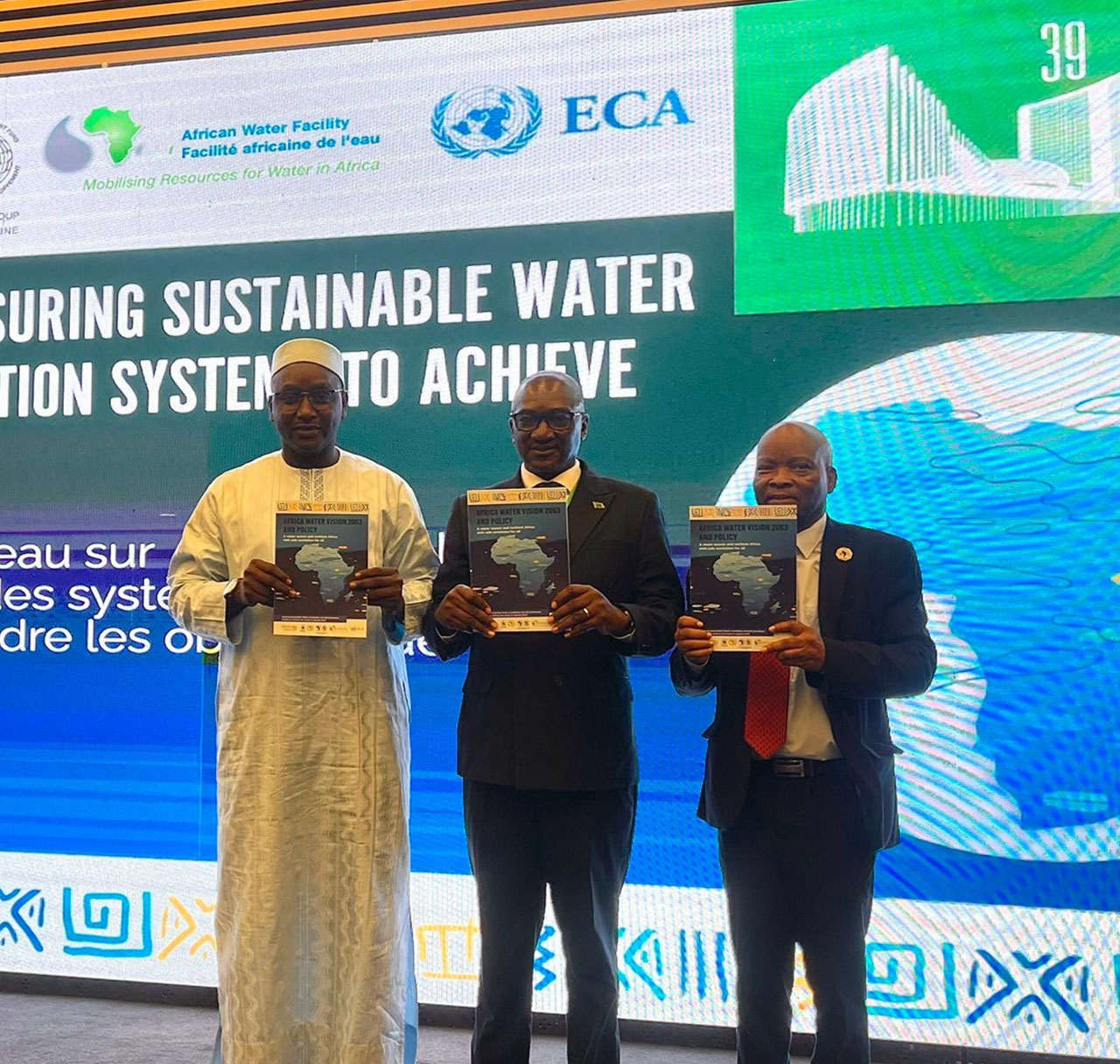
The launch of the Africa Water Vision 2063 has renewed continental commitment to ensuring sustainable water availability and safe sanitation as a central pillar of development under the African Union’s Agenda 2063 framework.
Speaking at the official unveiling on 15th February 2026, on the margins of the 39th African Union Summit, H.E. Moses Vilakati, Commissioner for Agriculture, Rural Development, Blue Economy and Sustainable Environment (ARBE), stressed the urgency of coordinated action to address Africa’s growing water and sanitation crisis.
According to him, nearly 400 million Africans still lack access to basic water services, while approximately 700 million are without safe sanitation—figures that pose serious threats to public health, food security, environmental sustainability, and economic productivity.
Bridging the Investment Gap
Commissioner Vilakati underscored the need to close the estimated $45–54 billion annual investment gap required to meet continental water and sanitation targets. He called for strengthened political leadership, improved governance systems, enhanced partnerships, and innovative financing mechanisms to drive progress.
“The legacy of our leadership will be measured by access to safe water and sanitation for every African family,” he stated, emphasizing that sustainable water management is fundamental to achieving inclusive growth and long-term resilience.
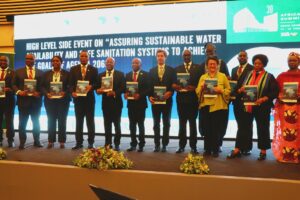
Water Security as a Development Imperative
The Africa Water Vision 2063 aligns with African Union development priorities under Agenda 2063, positioning water security and sanitation as critical enablers of health, agricultural productivity, job creation, climate resilience, and human dignity.
The Vision calls for accelerated implementation of practical solutions that expand access to clean water, strengthen sanitation infrastructure, and promote sustainable management of water resources across member states.
A Collective Responsibility
As Africa charts its long-term development pathway, the launch of the Africa Water Vision 2063 serves as both a policy milestone and a moral call to action. Leaders, governments, development partners, and private sector actors are urged to collaborate in transforming the continent’s water landscape—ensuring that no community is left behind.
With renewed political will and strategic investment, Africa’s future can be shaped by universal access to safe water and sanitation—laying the foundation for healthier communities, stronger economies, and a more resilient continent.