


Africa stands at a defining moment in global trade diplomacy.
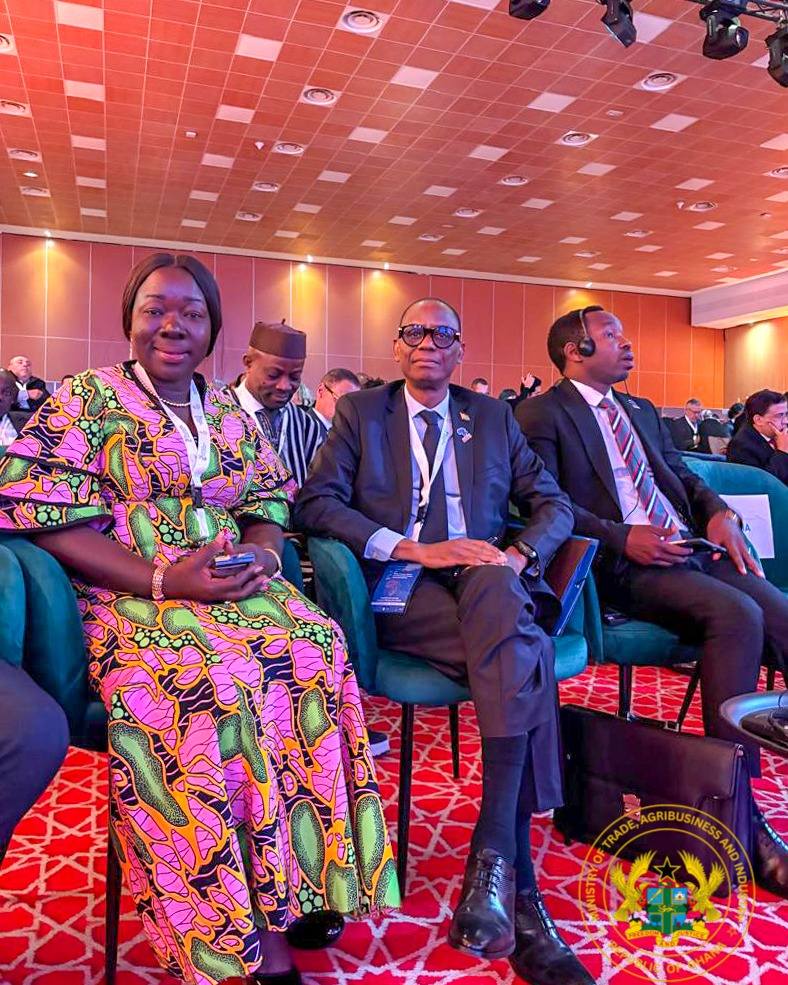
From 11–12 December 2025, African Trade Ministers and senior government officials met in Marrakech, Morocco, for a high-level Ministerial Retreat aimed at forging a unified African strategy ahead of the 14th World Trade Organization (WTO) Ministerial Conference (MC14), scheduled for March 2026 in Yaoundé, Cameroon.
Convened on the margins of the 2nd AfCFTA Business Forum, the retreat sought to strengthen coordination within the African Group and agree on a common roadmap to advance and defend Africa’s priorities in multilateral trade negotiations.
From Rule-Takers to Rule-Makers
Speaking during the retreat, Hon. Elizabeth Ofosu-Adjare (MP), Ghana’s Minister for Trade, Agribusiness and Industry, offered a powerful reflection on Africa’s position in the global trading system.
She recalled that when the WTO was established in Marrakech in 1994, many African countries arrived “like observers at the table,” signing on to agreements largely shaped by others, with limited influence over the outcomes of the Uruguay Round.
“For too long, Africa operated as a rule-taker rather than a rule-maker,” the Minister noted. “This is no longer our story.”
With MC14 being hosted on African soil, she stressed that the conference must mark a turning point—one where Africa decisively shapes the future of the WTO, including reforms that support development, industrialisation, policy space, and equity in the global trading system.
AfCFTA: Turning Commitments Into Commercial Results
Beyond WTO negotiations, the retreat also focused on making the African Continental Free Trade Area (AfCFTA) deliver tangible benefits for African businesses and citizens.
Hon. Ofosu-Adjare, speaking on a ministerial panel, called for stronger continental solidarity to address the structural constraints holding back intra-African trade. She highlighted persistent challenges, including:
-
Non-tariff barriers
-
High logistics and transport costs
-
Weak regional connectivity and limited maritime capacity
-
Lack of harmonisation in customs and standards
-
Trade finance gaps, particularly affecting SMEs and women-led enterprises
She emphasized that AfCFTA will succeed only if African countries act collectively to dismantle these bottlenecks through coordinated reforms, improved trade facilitation, and strategic investments in transport corridors, border systems, standards infrastructure, and digital trade enablers.
Why This Moment Matters
The Marrakech retreat concluded with a shared commitment by Ministers to:
-
Deepen African coordination ahead of MC14
-
Align negotiating positions
-
Ensure Africa’s priorities—productive capacity, resilience, and inclusive growth—are reflected in multilateral outcomes
Ministers reaffirmed that the AfCFTA remains Africa’s primary vehicle for industrialisation, value addition, and regional value chains, and that a unified African voice at MC14 is essential to building a WTO that truly works for development.
A Call to Action
As MC14 approaches, Africa must:
-
Speak with one voice in global trade negotiations
-
Defend policy space for industrialisation and economic transformation
-
Place SMEs, women, and young entrepreneurs at the centre of trade reforms
-
Ensure global trade rules serve people—not just markets
Africa’s future in global trade will not be handed to it.
It must be negotiated, defended, and claimed—together.
MC14 must be Africa’s moment.