


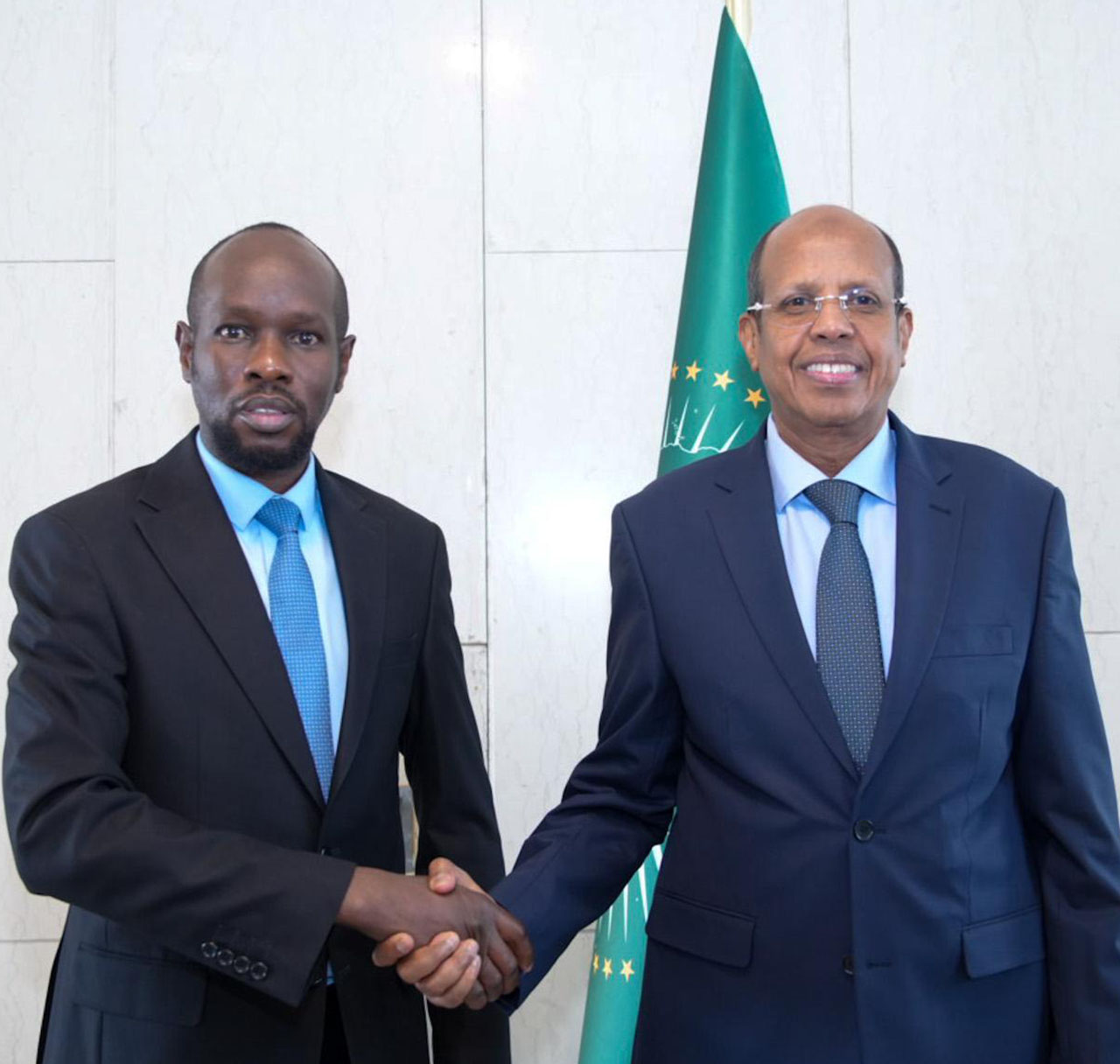
The Chairperson of the African Union Commission, H.E. Mahmoud Ali Youssouf, has reaffirmed his commitment to staff welfare and institutional reform following a high-level consultative meeting with the Bureau of the AU Staff Association.
The engagement, held this morning, focused on advancing constructive dialogue between leadership and staff as part of ongoing efforts to strengthen the effectiveness, credibility, and performance of the Commission.
Staff Welfare and Reform at the Forefront
The President of the Staff Association, Nouhou Thiam, alongside members of his Bureau, briefed the Chairperson on key issues relating to staff welfare and the progress of reform processes within the Commission.

The Bureau welcomed the reforms currently underway and expressed appreciation for the Chairperson’s inclusive and consultative leadership style. They noted that sustained engagement between management and staff has already begun to yield positive outcomes, reinforcing trust and collaboration within the institution.
People-Centred Reform Agenda
In his remarks, H.E. Mr. Youssouf underscored that the strength and credibility of the Commission rest fundamentally on its people. He emphasised that staff welfare and institutional effectiveness are mutually reinforcing pillars essential to building a high-performing Commission capable of delivering on the African Union’s mandate.
The Chairperson reassured the Bureau that the reform agenda is firmly guided by the objectives of enhancing service delivery, strengthening accountability, and reinforcing institutional credibility. He reiterated leadership’s commitment to fairness, transparency, and integrity in all processes.
Sustaining Structured Engagement
Highlighting the importance of collaborative governance, the Chairperson encouraged the continuation of structured, solution-oriented dialogue between leadership and staff. He described such engagement as a cornerstone of resilient institutions and a shared pathway toward building a results-driven Commission.
The consultative meeting reflects a broader commitment to inclusive reform—one that recognises that institutional transformation is most effective when driven by partnership, trust, and collective responsibility.