


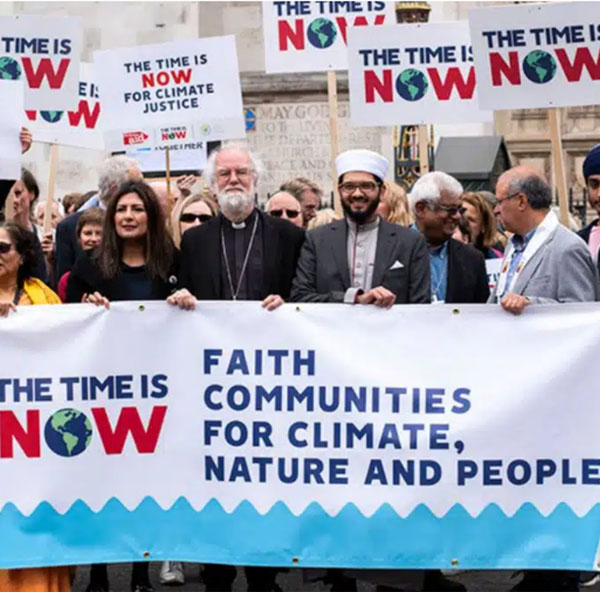
As the world grapples with the escalating climate crisis, a growing consensus suggests that religious communities can play a pivotal role in driving meaningful, large-scale action to safeguard the environment and support the vulnerable. A recent analysis highlights how faith groups, rooted in principles of stewardship, justice, and care for creation, are uniquely positioned to mobilise millions toward climate solutions that matter.
Climate change remains one of humanity’s most urgent threats, disproportionately impacting poor and marginalised populations and jeopardising the biodiversity and stability of ecosystems worldwide. The article underscores that, beyond scientific and political responses, climate action also presents a moral and ethical challenge—a test of shared responsibility that faith leaders and communities are well-placed to champion.
Harnessing Moral Authority for Environmental Justice
Faith communities possess significant influence and reach, guided by traditions that emphasise stewardship of the Earth and compassionate care for others. These values translate into practical opportunities to educate and mobilise followers on climate issues, advocate for equitable policies, and model sustainable lifestyles.
According to the report:
-
Religious groups can educate their members about climate change and the moral duty to act.
-
They can advocate for strong climate policies, including reduced emissions, renewable energy adoption, and biodiversity protection.
-
Faith institutions can reduce their own environmental footprint by conserving energy, cutting waste, and supporting local sustainability initiatives.
-
Interfaith cooperation can amplify voices for climate justice and build trust across diverse communities.
-
Religious organisations can contribute to grassroots efforts that support climate adaptation and resilience, especially in the Global South. Earth.Org
From Sermons to Action
The advocacy case is clear: faith actors must move beyond spiritual messages to environmental leadership. By embracing eco-theology and engaging communities in climate advocacy, religious leaders can inspire both moral conviction and practical solutions. When faith networks champion renewable energy, ecosystem protection, and climate-smart agriculture, they become powerful agents of change—mobilising millions for collective action. Earth.Org
A Moral Imperative with Global Impact
The article also highlights examples of faith-linked initiatives that bridge religious values with environmental stewardship, such as interfaith coalitions protecting forests, Muslim-led sustainability campaigns, and networks promoting environmentally friendly pilgrimage practices.
Experts stress that if faith leaders, scientists, policymakers, and civil society join forces, the results could be transformative:
-
Increased public awareness of climate science and moral duty,
-
Stronger political advocacy for low-carbon transitions,
-
Mobilised resources for climate innovation, and
-
Enhanced community resilience rooted in solidarity and shared responsibility.
Call to Action for Faith-Inspired Climate Engagement
As climate impacts worsen across Africa, the Caribbean, Asia, and beyond, the role of faith communities cannot be understated. With an estimated majority of the global population identifying with a religion, their collective voice and moral leadership are critical to galvanising climate action that is just, inclusive, and effective.
The time for faith-driven climate engagement is now. Religious organisations are urged to embrace their moral mandate, leverage their influence, and partner with broader climate movements to protect both people and the planet for current and future generations.
source: earth.org





Trying out 666betlogin – simple and direct to the point, which I like. Hopefully, luck is on my side! Give it a look: 666betlogin