


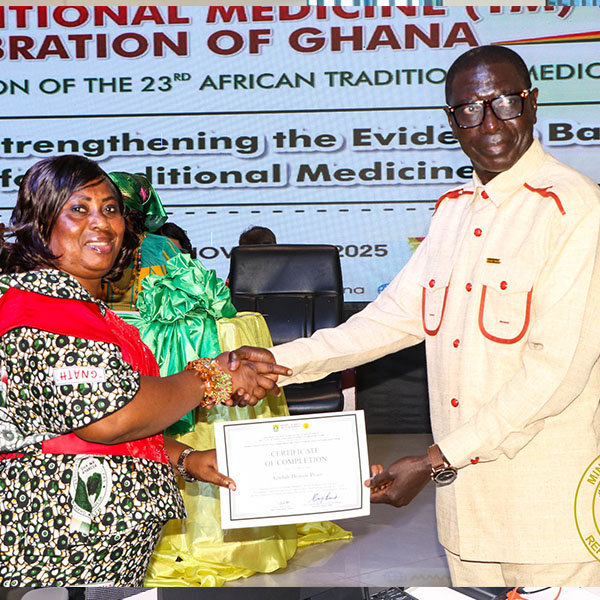
Ghana has reaffirmed its commitment to strengthening the scientific foundation, regulation and integration of traditional medicine into the national health system as the Ministry of Health marked the 23rd African Traditional Medicine Day and the 26th Traditional Medicine Week.
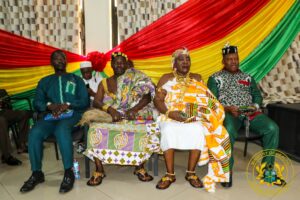
Speaking on behalf of the Minister for Health, Hon. Kwabena Mintah Akandoh, the Director of Traditional and Alternative Medicine, Dr. Anastasia Yirenkyi, said this year’s theme, “Strengthening the Evidence Base for Traditional Medicine,” reflects the government’s determination to enhance research, safety and quality assurance in herbal and alternative medicine practice.

Dr. Yirenkyi highlighted the critical role of research and academic institutions such as the Centre for Plant Medicine Research, Kwame Nkrumah University of Science and Technology, University of Ghana, and the University of Health and Allied Sciences, working alongside the Food and Drugs Authority and the Traditional Medicine Practice Council (TMPC). She said their collaboration is essential for ensuring that traditional medicine products meet approved standards and practitioners adhere to ethical guidelines.

Addressing the gathering, Prof. Samuel Ato Duncan, President of the Ghana Federation of Traditional Medicine Practitioners Associations and Chairman of TMPC, outlined significant progress in the sector. These include the licensing of over 6,000 practitioners, certification of more than 50 herbal manufacturing facilities, and the establishment of traditional medicine units in 55 district hospitals nationwide.

Prof. Duncan also acknowledged challenges such as inadequate resources, limited research funding and persistent public misconceptions. He called for stronger collaboration between government, practitioners, researchers and investors, as well as better protection of indigenous knowledge.
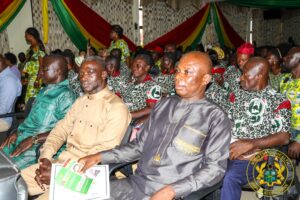
Representing the Ministry of Health, Dr. Yirenkyi reiterated the government’s commitment to expanding evidence-based traditional medicine, improving regulatory systems and positioning the sector as a key contributor to both national health and economic development.
The commemoration ended with a renewed call for innovation, investment and stronger partnerships to modernize Ghana’s traditional medicine sector while preserving its cultural significance.