


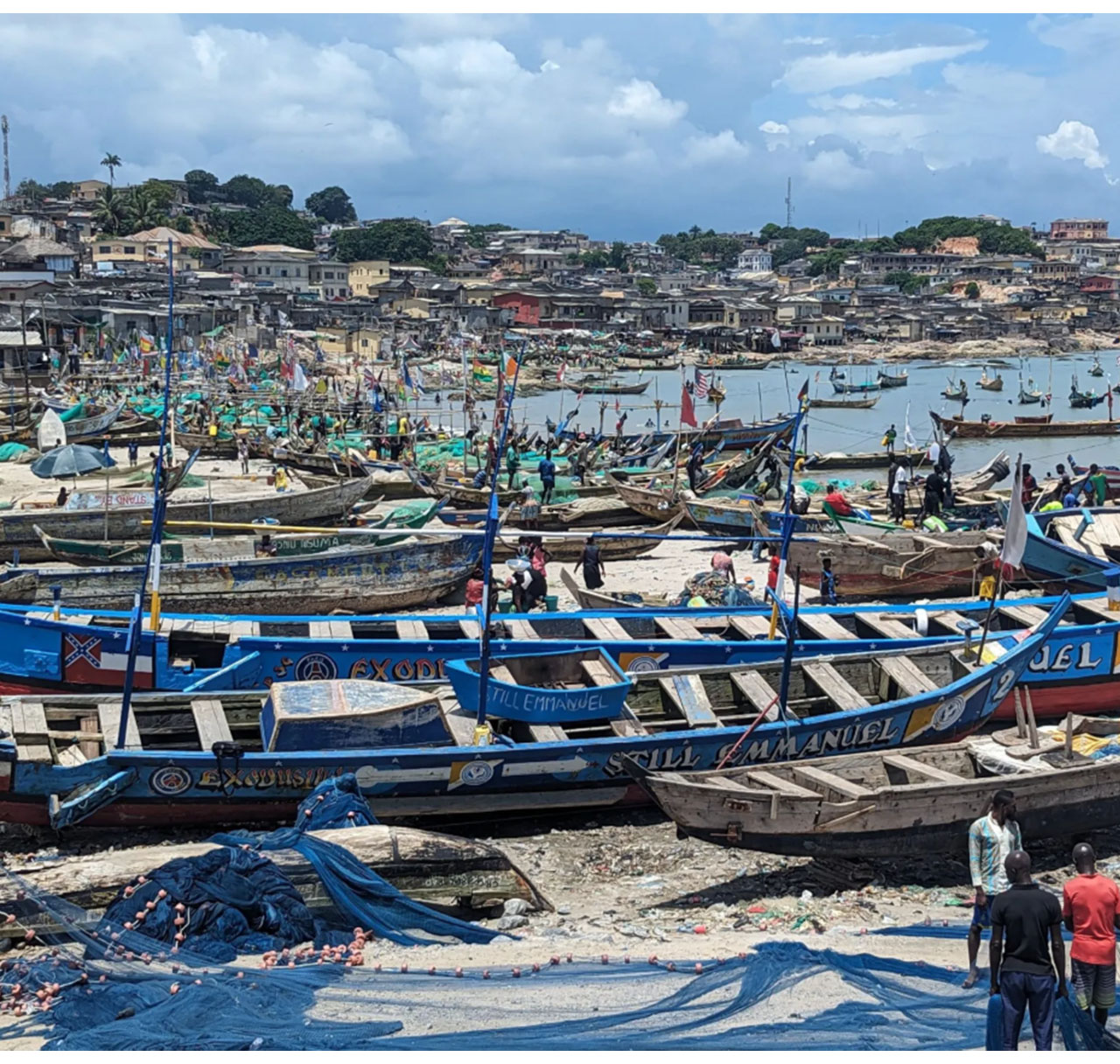
Across Ghana’s coastal communities, thousands of artisanal fishers begin their day before dawn, setting out to sea in search of livelihood. They return late at night, often exhausted, having braved turbulent waters, mechanical breakdowns, and increasingly, security threats.
Yet despite the high-risk nature of their work, the majority operate without any form of formal insurance protection.
When accidents occur — whether through storm damage, fire outbreaks, theft, piracy, or injury — many are left with no financial cushion. Families are often forced to sell property, withdraw children from school, or deplete savings to recover from losses.
Informal Systems Over Formal Protection
In an exclusive interview, Farinyin Kwegya Amoo, a fisherman in Elmina, revealed he does not hold any insurance policy.
Instead, he participates in a weekly contribution scheme with fellow fishers. The funds are primarily used to support members during funerals or emergencies. Additionally, he contributes to a daily susu scheme, collecting his savings monthly from susu operators.
For him, this system feels accessible and trustworthy.
Auntie Mansah, a local fishmonger, expressed similar reservations about formal insurance. She prefers to keep her money at home, citing fears of losing funds or facing difficulties accessing her money when needed.
These concerns reflect broader sentiments within Ghana’s informal sector.
Why Many Fishers Avoid Insurance
Several factors discourage participation in formal insurance schemes:
- Limited trust in financial institutions
- Low awareness of available insurance products
- Perceived high premiums
- Complex documentation requirements
- Irregular and seasonal income patterns
- Delays and uncertainty in claims processing
For many, informal savings and community support appear more reliable.
However, experts argue that such systems are insufficient when major losses occur.
The True Cost of Being Uninsured
Artisanal fishing is inherently risky. Fishers face:
- Boat capsizing and drowning
- Loss of outboard motors and fishing nets
- Piracy and armed robbery at sea
- Fire outbreaks at landing beaches
- Sudden illness or permanent injury
- Market losses due to spoilage
A damaged boat or stolen motor can cost tens of thousands of cedis — far beyond what weekly contributions or susu savings can cover.
Without insurance, recovery can take years, pushing families deeper into financial vulnerability.
Why Insurance Matters
Insurance offers structured protection that goes beyond emergency collections.
With appropriate coverage, fishers and fishmongers can insure:
- Fishing vessels and equipment
- Personal accident risks
- Health emergencies
- Stock and business capital
Insurance can:
- Prevent distress sale of assets
- Protect children’s education
- Enable quicker business recovery
- Improve access to credit and financial services
In effect, insurance provides continuity — ensuring that a single incident does not collapse an entire household economy.
The Need for Tailored Solutions
Industry observers argue that the solution is not merely urging fishers to enroll but designing insurance products that reflect their realities.
Insurance providers must consider:
- Flexible premium payment structures
- Microinsurance models suited to low-income earners
- Simplified claims processes
- Education campaigns at landing beaches
- Partnerships with chief fishermen and fisher associations
Regulators and policymakers also have a role to play in strengthening consumer protection and promoting financial literacy within coastal communities.
A Sector That Feeds the Nation
Ghana’s artisanal fishing industry remains a critical contributor to national food security and employment. The sector sustains thousands of households and supports local economies along the coast.
Yet those who feed the nation often operate without financial protection.
As maritime risks increase and economic pressures mount, the question becomes more urgent: Can Ghana’s artisanal fishers afford to remain uninsured?
Insurance may not eliminate the dangers of the sea, but it can prevent disaster from turning into generational poverty.
For many within the industry, the shift from informal survival systems to structured financial protection may be the difference between resilience and ruin.