


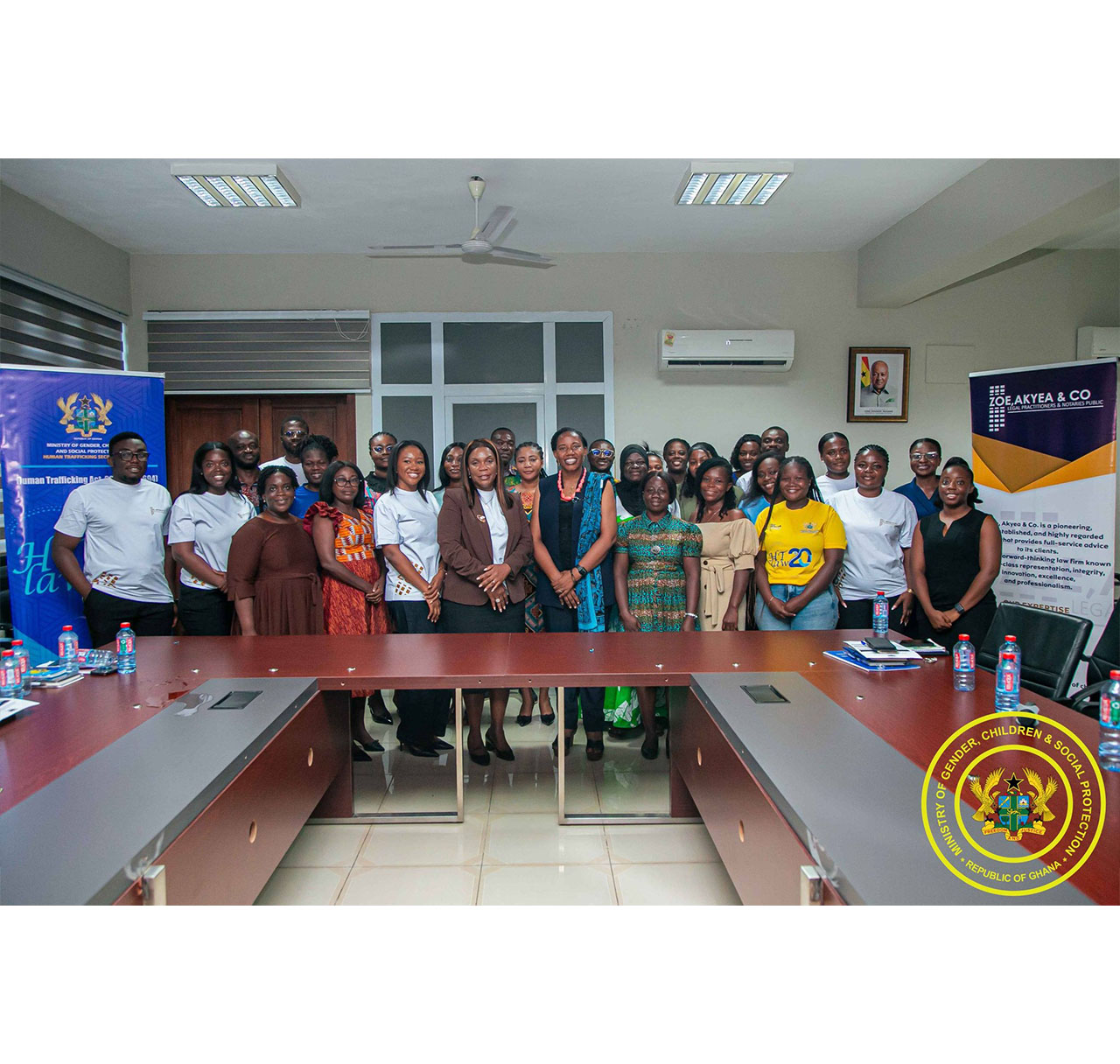
The Ministry of Gender, Children and Social Protection has intensified efforts to combat human trafficking by equipping its staff with practical skills to detect, prevent, and respond to cases of exploitation.
Through its Human Trafficking Secretariat, the Ministry organized a specialized training session aimed at strengthening institutional capacity and improving coordination in tackling what experts describe as a growing and complex crime.
The training, held in collaboration with Zoe, Akyea & Co., forms part of a broader national strategy to move beyond awareness and build a more responsive and effective system to protect victims and prosecute offenders.
Beyond Awareness: Building Real Capacity
Participants were taken through practical sessions designed to deepen their understanding of the nature, causes, and consequences of human trafficking.
The training emphasized the globally recognized 4Ps framework—Prevention, Protection, Prosecution, and Partnership—as a comprehensive approach to addressing the crime.
Head of the Secretariat, Abena Annobea Asare, described the initiative as a critical step toward ensuring that government officials are fully equipped to respond effectively.
“This is about empowering our staff with the right tools—not just to understand trafficking, but to act decisively in preventing it and protecting victims,” she noted.
Strengthening Legal Response and Victim Protection
Legal experts from Zoe, Akyea & Co. delivered technical sessions on national and international legal frameworks governing human trafficking, including prosecution processes and victims’ rights.
Through case studies and interactive discussions, participants gained insights into how trafficking cases are handled and how institutions can better collaborate to ensure justice and support for survivors.
A Call for Coordinated Action
The training also highlighted the importance of inter-agency collaboration, stressing that no single institution can tackle human trafficking alone.
Officials say stronger coordination between social services, law enforcement, and legal practitioners is essential to dismantle trafficking networks and prevent further exploitation.
Protecting the Most Vulnerable
Human trafficking continues to affect vulnerable groups, particularly women and children, often driven by poverty, lack of opportunity, and weak enforcement systems.
Stakeholders say building institutional capacity is key to identifying victims early, preventing abuse, and ensuring that survivors receive the care and protection they deserve.
Sustaining the Fight Against Modern-Day Slavery
As Ghana strengthens its response to human trafficking, experts are calling for sustained investment in training, public education, and enforcement.
They emphasize that ending trafficking requires not only strong laws but also informed institutions, vigilant communities, and continuous collaboration.
The Ministry’s latest initiative signals a renewed commitment to tackling modern-day slavery and safeguarding human dignity across the country.