

Ghana’s coastal communities depend on the sea not just for food, but for survival, identity, and economic stability. Today, protecting our marine resources is no longer an option — it is a necessity.
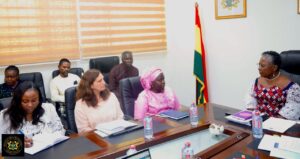
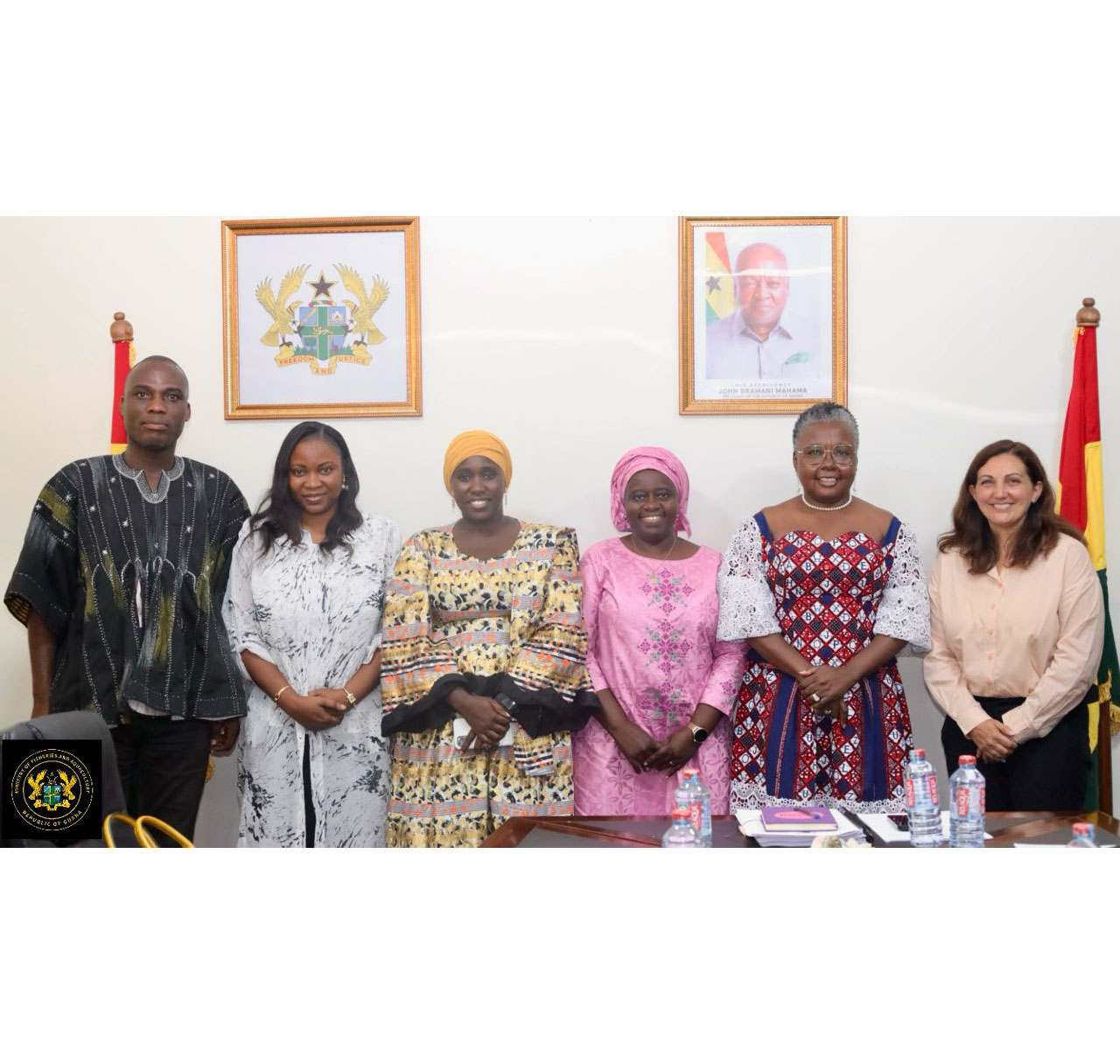
In a significant step toward strengthening sustainable fisheries governance, international marine conservation organisation Blue Ventures has paid a courtesy call on the Minister for Fisheries and Aquaculture, Emelia Arthur, reaffirming its commitment to supporting Ghana’s fisheries sector.
The meeting was more than a formal engagement. It was a renewed pledge to deepen collaboration, empower coastal communities, and align international expertise with Ghana’s national fisheries priorities.
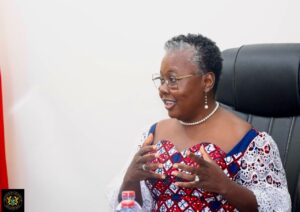
Welcoming the delegation, Hon. Emelia Arthur commended Blue Ventures for its community-centred approach and its support for the National Conference of Chief Fishermen and Queen Fishmongers. She emphasized that rebuilding fish stocks, protecting marine ecosystems, and securing livelihoods require strong partnerships rooted in community participation and evidence-based management.
Since expanding its work to West Africa in 2023, Blue Ventures has partnered with coastal communities across the region, promoting co-management systems and strengthening small-scale fisheries organisations. Following an exploratory mission to Ghana in 2025, the organisation expressed confidence in the country’s policy direction — particularly measures such as the extension of the artisanal Inshore Exclusive Zone and the establishment of Landing Beach Enforcement Committees.
These reforms are critical. They protect small-scale fishers, improve compliance, and ensure that marine resources are preserved for future generations.
Blue Ventures’ current mission, scheduled from 22nd February to 2nd March 2026, seeks to move beyond dialogue into practical action — reviewing partnership frameworks, engaging key stakeholders, and conducting field visits to selected landing beaches to better understand the realities on the ground.
Planned engagements with institutions such as the Centre for Coastal Management at the University of Cape Coast, CaFGOAG, GNCFC, and GFRA demonstrate a collective commitment to co-develop solutions that strengthen fisheries governance nationwide.
This partnership sends a clear message: sustainable fisheries cannot be achieved by government alone. They require collaboration, community leadership, technical expertise, and shared responsibility.
As Ghana works to restore its fish stocks and secure the future of its coastal communities, partnerships like this represent hope — hope for resilient marine ecosystems, thriving fishing communities, and a fisheries sector built on sustainability and accountability.
Protecting our oceans today ensures prosperity tomorrow.