


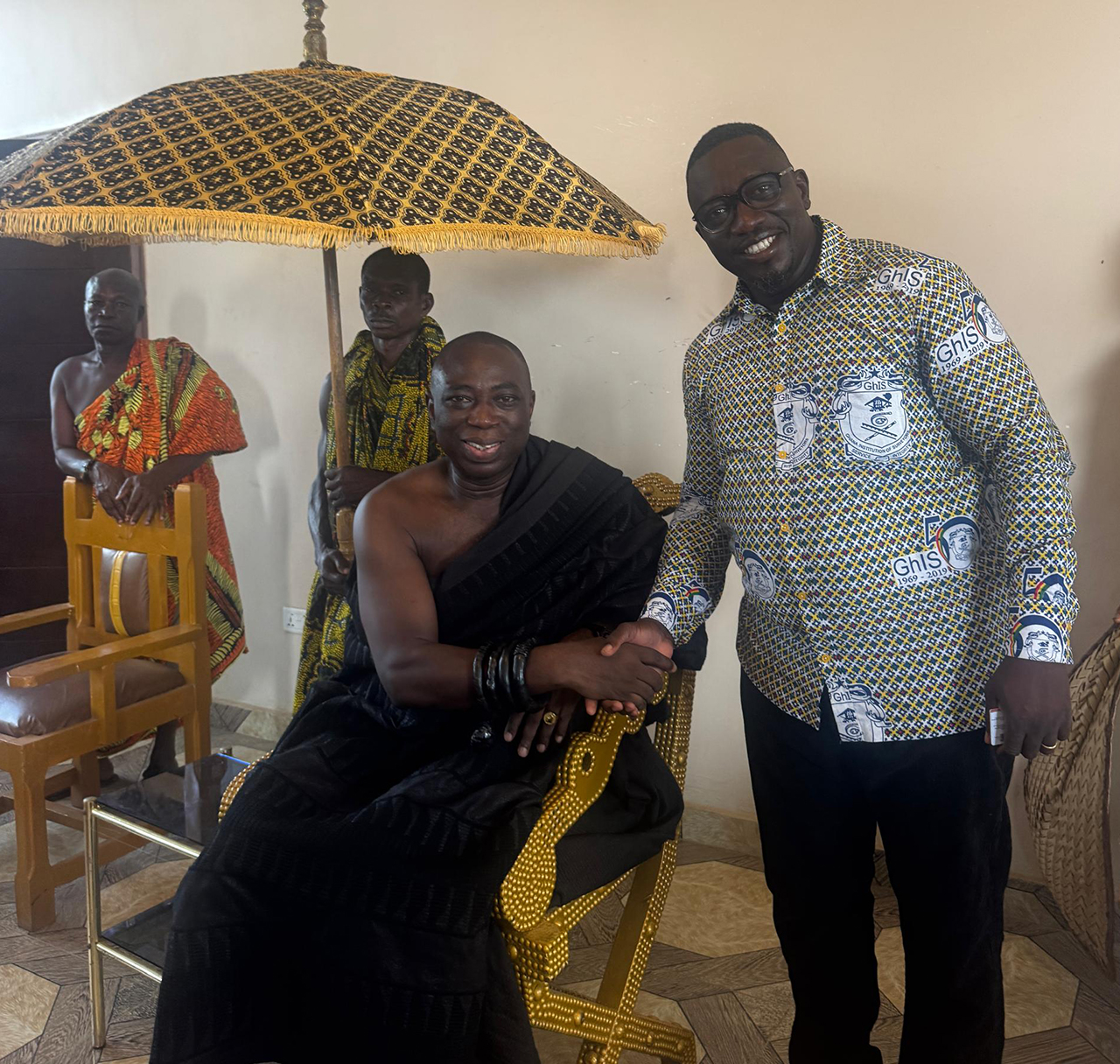
The Twifoman Traditional Council has been urged to prioritize effective land governance as a critical tool for strengthening its authority, promoting development, and preserving cultural heritage.
This came to light during a presentation delivered by Engr. Surv. Dr. Dr. Ebenezer Ankama Gyamera to the Council, which is headed by Otumfoa Amoah Sasarku IV. The presentation emphasized that land governance remains central to decision-making, legitimacy, and sustainability within traditional institutions.
Addressing the Council, Dr. Gyamera highlighted that in Ghana—where customary land ownership remains dominant—the role of traditional authorities in land management goes beyond administrative duties and directly influences social stability, economic growth, and cultural identity.
He stressed that transparent land allocation, proper documentation, and effective dispute resolution mechanisms are essential in reinforcing public trust and sustaining the authority of chiefs and elders. According to him, well-managed land systems significantly reduce disputes, which remain one of the leading causes of conflict in many communities.
The Council was further informed that strong land governance systems create an enabling environment for both local and foreign investment, particularly in sectors such as agriculture, real estate, and infrastructure. This, he noted, translates into job creation, increased revenue, and improved livelihoods for community members.
Dr. Gyamera also underscored the importance of environmental sustainability, urging traditional authorities to regulate land use practices to curb illegal activities such as unauthorized mining and deforestation, while promoting responsible land management for future generations.
On financial accountability, he noted that effective land administration enhances revenue mobilization through proper tracking of land transactions and fee collection. These resources, he explained, can be channeled into critical community development projects, including education, healthcare, and infrastructure.
Furthermore, the presentation highlighted the need for stronger collaboration between traditional councils and state institutions such as the Lands Commission to ensure that customary land ownership is properly documented and aligned with national legal frameworks.
The Council was also reminded of its role in preserving cultural heritage, as land holds deep spiritual and ancestral significance. Protecting sacred sites and cultural landscapes, he emphasized, remains a core responsibility of traditional leaders.
In conclusion, Dr. Gyamera underscored that strengthening land governance systems is essential for ensuring sustainable development, preventing conflicts, and maintaining the relevance and authority of traditional councils in modern Ghana.