


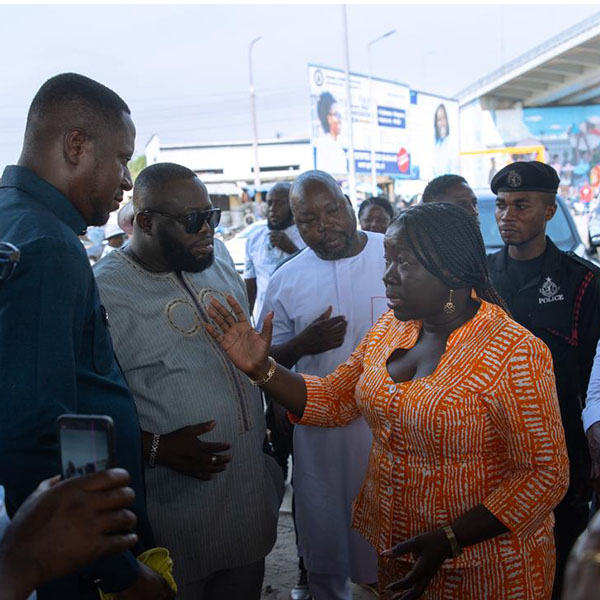
In a decisive move to protect consumers and reduce the rising cost of living, the Minister for Trade, Agribusiness and Industry, Hon. Elizabeth Ofosu-Adjare, has taken government’s fight for fair pricing and market transparency directly to the heart of Ghana’s auto-parts trade—the Abossey Okai Spare Parts Market.

The Minister paid a working visit to the bustling Accra market on Monday, January 12, 2026, to assess current prices of vehicle spare parts and engage traders on the challenges affecting fair trade within the sector. The visit forms part of broader government efforts to ensure that recent improvements in the Ghanaian cedi are reflected in prices paid by ordinary consumers.
Hon. Ofosu-Adjare was accompanied by the Mayor of Accra, Hon. Michael Kpakpo Allotey, and the President of the Ghana Union of Traders’ Associations (GUTA), Mr. Clement Boateng, underscoring the government’s commitment to collaborative, people-centred market reforms.

Fair Pricing Is a Cost-of-Living Issue
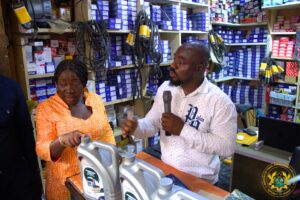
During a closed-door meeting with executives of the Abossey Okai Spare Parts Dealers’ Association, the Minister gathered first-hand insights into market conditions. Addressing traders afterward, she explained that the visit was a follow-up to an earlier engagement at the Ministry, where discussions focused on currency stability and responsible pricing.
She stressed that spare parts pricing directly affects transport costs, business operations, and household expenses, making fairness and transparency in the market a national priority.
“Government is committed to ensuring that consumers benefit from macro-economic gains,” she emphasized, adding that traders have a responsibility to reflect positive currency performance in their pricing.
Middlemen Exploitation Exposed
The President of the Abossey Okai Market Association, Mr. Henry Okyere Jnr., acknowledged that spare parts prices have declined in recent weeks but identified the activities of middlemen—locally referred to as “Affairs”—as a major challenge undermining consumer trust.
According to him, these middlemen often intercept car owners before they reach shop owners, selling spare parts at highly inflated prices and creating the false impression that Abossey Okai traders are responsible for overpricing. He further noted that some automobile fitters also exploit unsuspecting customers by exaggerating the cost of parts.
Government Moves to Restore Order
In response, Hon. Ofosu-Adjare announced plans to establish a police post at the entrance of the market to clamp down on the activities of unscrupulous middlemen and protect consumers from exploitation.
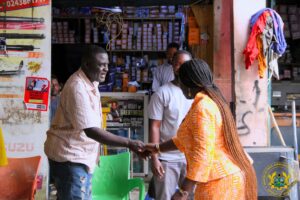
At the same time, she encouraged spare parts dealers to explore ways of formally integrating and employing some of these individuals, a move aimed at promoting order, accountability, and decent livelihoods within the market ecosystem.
Improving Access and Direct Trade
The Mayor of Accra, Hon. Michael Kpakpo Allotey, also announced that by the first week of February 2026, government will create a designated car park along the Agbogbloshie stretch to decongest the Abossey Okai area. He explained that the intervention will improve accessibility and encourage car owners to deal directly with shop owners, reducing opportunities for exploitation.
A Call for Collective Responsibility
The Trade Minister commended the spare parts dealers for their cooperation and assured them of government’s continued engagement. She called for sustained collaboration among traders, local authorities, and government agencies to support industrialisation, consumer protection, and economic transformation.
Advocates say the visit sends a clear signal: market reforms must work for the ordinary Ghanaian. By confronting unfair practices and restoring transparency at Abossey Okai, government is taking concrete steps to ensure that economic gains translate into real relief at the marketplace.