


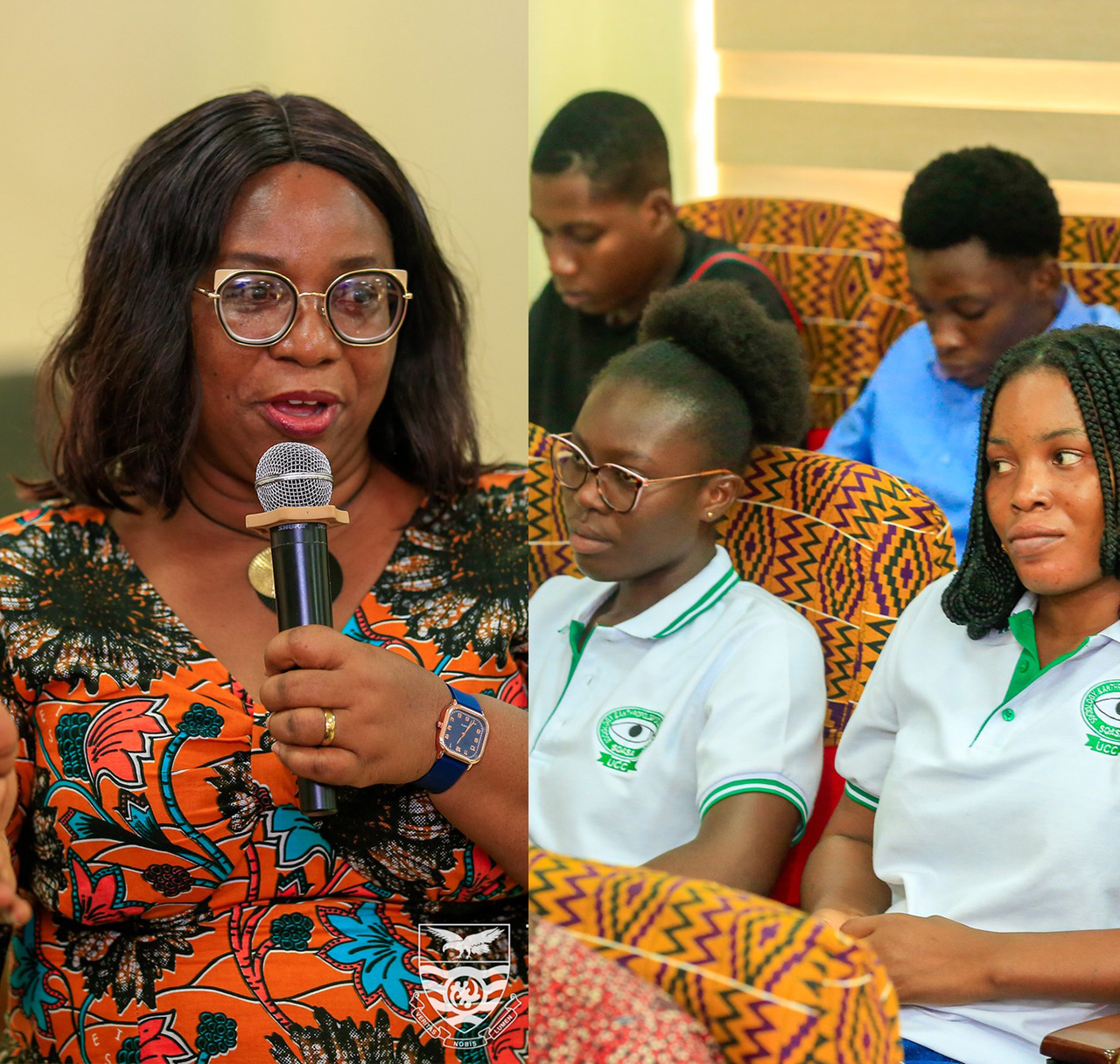
The University of Cape Coast has joined the global academic community in commemorating the 2026 World Anthropology Day, with a renewed call to reposition anthropology as a practical tool for solving Ghana’s pressing social challenges.
The event, organised by the Department of Sociology and Anthropology at UCC, formed part of the global observance of World Anthropology Day — an initiative launched in 2015 by the American Anthropological Association to promote public understanding of human culture, society and biological evolution. The day is marked annually on the third Thursday of February through lectures, exhibitions and community engagements worldwide.
This year’s global theme, “On the Verge: Making Anthropology Practical, Changing Narratives,” resonated strongly with participants as speakers emphasised the need to translate anthropological knowledge into real-world impact.
Opening the event, Head of Department, Professor Georgina Oduro, described anthropology as foundational to many academic disciplines and central to understanding humanity in all its dimensions.
“Anthropology revolves around humanity and culture,” she stated, explaining that the field encompasses diverse branches including cultural, environmental, medical and linguistic anthropology.
Professor Oduro also addressed widespread misconceptions about career prospects in anthropology. She urged the public to move beyond the narrative that the discipline lacks employment opportunities, stressing that anthropology equips students with broad, versatile skills applicable in legal practice, business strategy, policy development and social research.
According to her, anthropology — like sociology and other social sciences — prepares graduates to analyse complex human systems and offer solutions grounded in cultural understanding and social realities.
The Provost of the College of Humanities and Legal Studies, Professor Daniel Agyapong, commended the Department for keeping the discipline visible and relevant. He noted that many societal challenges persist because insufficient attention is paid to programmes that examine the human dimensions of development.
He called on students to take the study of anthropology seriously, describing it as critical to addressing social fragmentation, governance gaps and community-level challenges.
Delivering the keynote address, Social Anthropologist Dr. Saibu Mutaru reinforced the need to make anthropology more accessible and action-oriented, aligning with the global theme’s call to reshape narratives and demonstrate the discipline’s practical value.
The commemoration at UCC served not only as an academic reflection but as an advocacy platform — challenging institutions, policymakers and students alike to recognise anthropology as a strategic tool for national development.
As the world stands “on the verge,” UCC’s message was clear: understanding people, cultures and social systems is not optional — it is essential for building inclusive, informed and sustainable societies.