


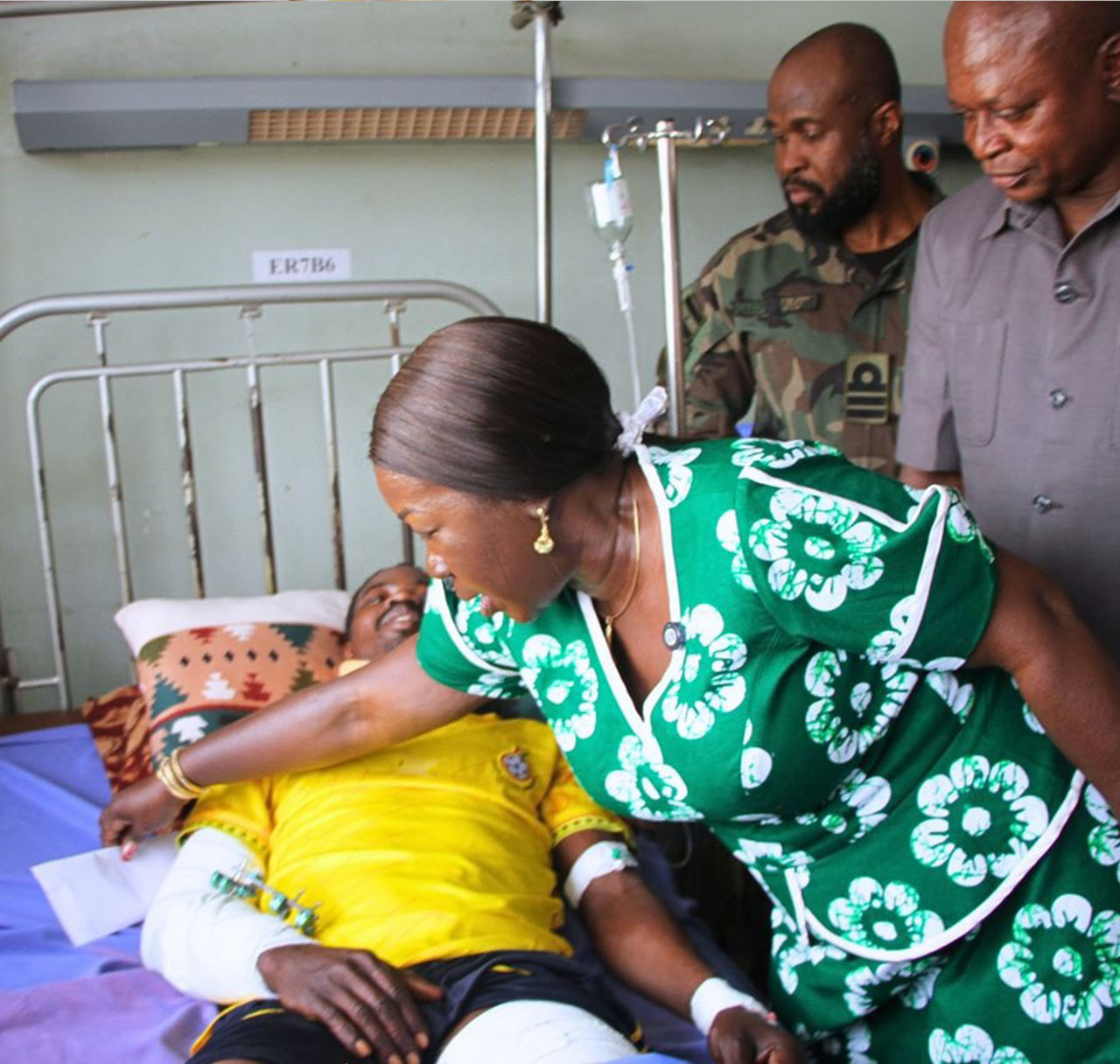
The Minister for Trade, Agribusiness and Industry, Elizabeth Ofosu-Adjare, and the Minister for Transport, Bukare Mikpe, have visited Ghanaian tomato traders who survived a recent attack in Burkina Faso, pledging stronger policy action to protect traders and boost local tomato production.
The Ministers, accompanied by the Deputy Trade Minister and senior officials of the Ministry, called on the injured traders at the 37 Military Hospital, where the two survivors — a male and a female — are currently receiving treatment for varying degrees of injuries sustained during the attack.
The visit was aimed at commiserating with the victims, assessing their condition, and offering encouragement as they continue their recovery.
Addressing the media after interacting with the traders, Hon. Ofosu-Adjare described the incident as unfortunate and deeply distressing. She emphasized that the risks faced by traders who travel outside Ghana to procure tomatoes highlight the urgent need to strengthen domestic production.
According to the Trade Minister, government is committed to promoting year-round tomato cultivation to reduce dependence on imports and limit exposure to cross-border vulnerabilities.
“It is our prayer and commitment that Ghana will be able to grow tomatoes throughout the year so that our traders will not have to take such risks beyond our borders,” she stated.
The renewed push for sustained local production forms part of broader efforts to enhance food security, stabilize supply chains, and safeguard livelihoods within Ghana’s agribusiness sector.
Hon. Ofosu-Adjare also commended the medical team for their dedication and urged them to continue delivering quality care to ensure the full recovery of the victims.
Receiving the delegation, Brigadier General R. Naab, Head of Obstetrics and Gynaecology at the hospital, expressed appreciation for the visit and assured the Ministers that the injured traders are responding positively to treatment and will continue to receive the best medical attention.
The visit not only demonstrated government solidarity with the affected traders but also reinforced a policy direction that seeks to transform adversity into renewed momentum for agricultural self-sufficiency and trader protection.