


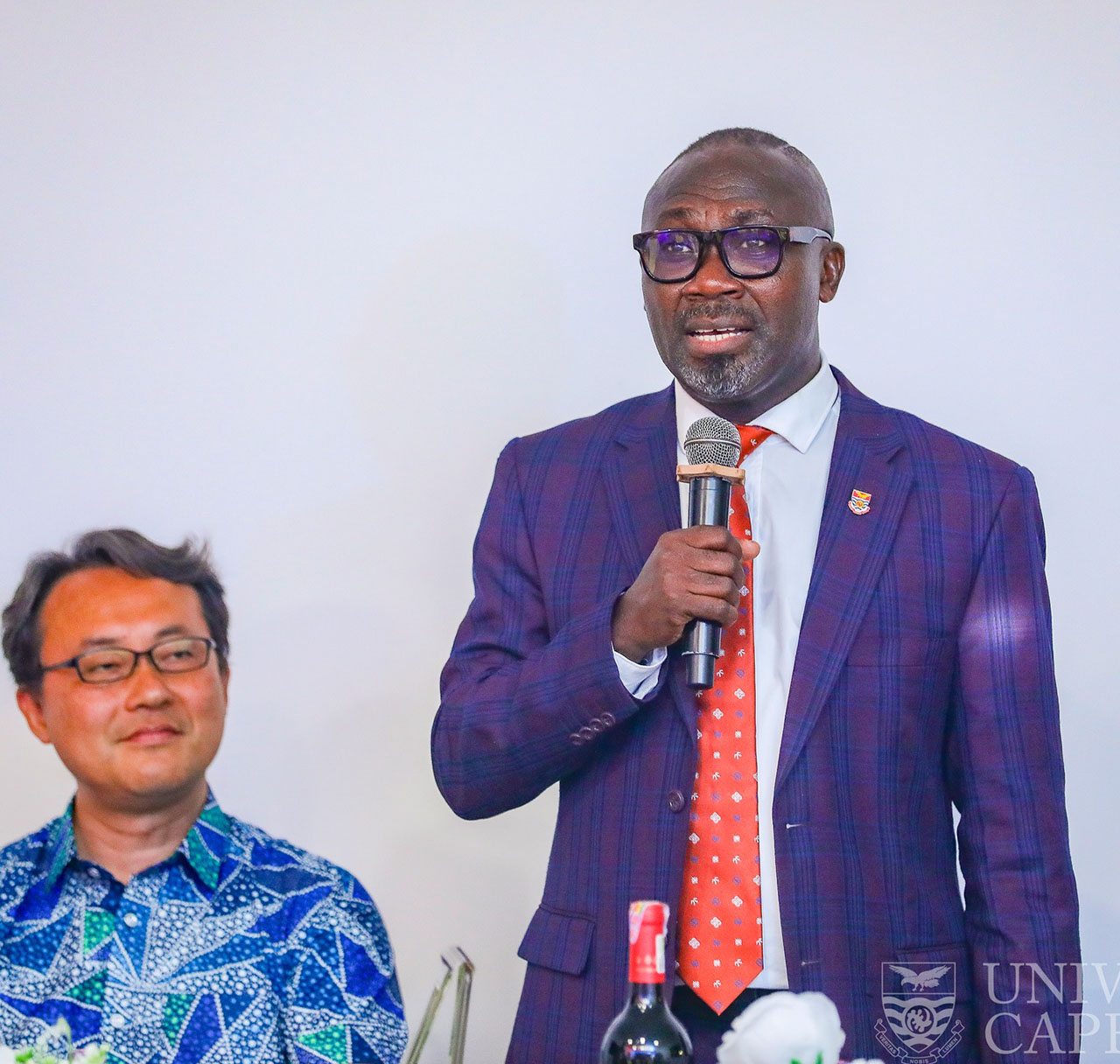
The University of Cape Coast (UCC) has renewed its commitment to international collaboration following high-level engagements with academic partners from the United States and Japan.
The discussions brought together delegations from the University of Cincinnati and the University of Tsukuba, who were in Cape Coast for academic exchange and study programmes aimed at strengthening research, innovation, and knowledge sharing.

Building Bridges Through Academic Exchange
The American delegation participated in a short study abroad programme, while the Japanese team engaged in an exchange initiative with the Centre for Coastal Management under the Africa Centre of Excellence for Coastal Resilience.
These engagements, stakeholders say, are critical in exposing students and faculty to global best practices while fostering cross-cultural learning and collaboration.
Driving Solutions for Coastal Challenges
The partnership comes at a time when Ghana’s coastal communities are increasingly vulnerable to climate change, coastal erosion, and marine resource depletion.
Experts believe that collaboration between institutions across continents can accelerate research and innovation needed to address these pressing challenges.
By leveraging expertise from diverse regions, universities can co-develop practical, science-based solutions that strengthen coastal resilience and support sustainable livelihoods.

Commitment to Long-Term Cooperation
At a dinner reception held in honour of the visiting delegations, the Acting Vice-Chancellor of UCC, Denis Aheto, reaffirmed the university’s commitment to deepening partnerships.
He expressed UCC’s strong interest in building long-term cooperation that goes beyond short-term exchanges to include joint research, capacity building, and institutional development.
A Call for Sustained Investment in Global Partnerships
Education stakeholders say such collaborations are essential for positioning Ghanaian institutions on the global stage while enhancing their ability to contribute to national development.

They stress that sustained investment in academic partnerships can drive innovation, improve teaching and learning, and equip the next generation with the skills needed to tackle global challenges.
As UCC expands its international network, the focus remains clear—leveraging global partnerships to deliver local impact, particularly in critical areas such as climate resilience, marine conservation, and sustainable development.