


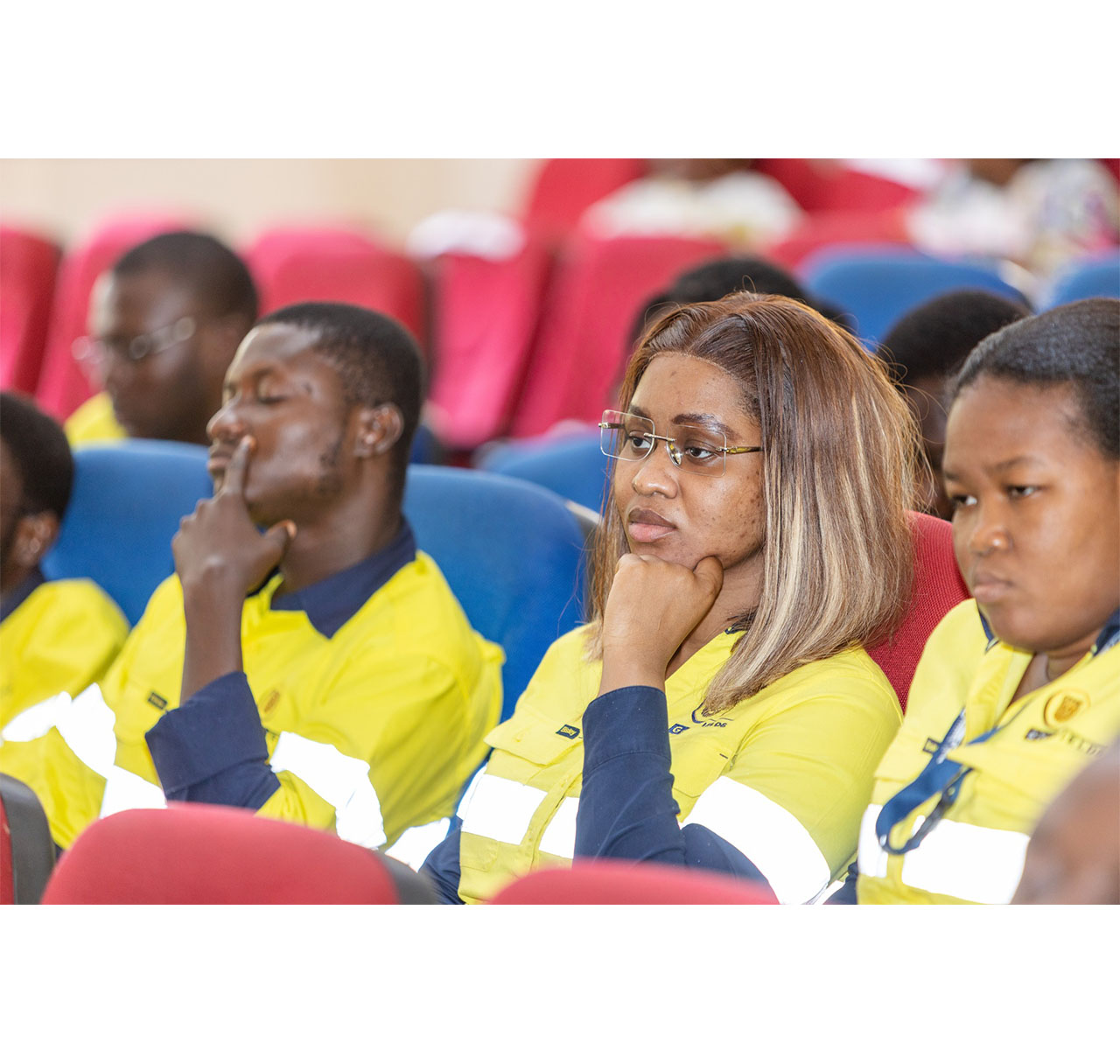
A major conversation is gaining urgency in Ghana’s labour landscape: workplace safety is no longer only about helmets, protective boots, warning signs and safety barriers. It is also about stress, burnout, fear, anxiety, workplace bullying and the mental pressures workers carry every day.
That message took centre stage when University of Mines and Technology, in collaboration with Gold Fields Ghana, hosted a symposium to mark the World Day for Safety and Health at Work under the theme: “Integrating Psychosocial Safety into the Ghanaian Working Environment: From Policy to Practice.”
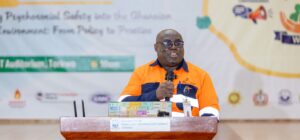
Held on April 28, 2026, the gathering brought together industry leaders, safety professionals, emergency agencies and policymakers to confront a reality many workplaces still overlook: psychological distress is a workplace safety issue.
For years, Ghana’s occupational safety systems have focused mainly on visible hazards. But according to speakers at the symposium, some of the most dangerous threats in today’s workplaces are often invisible.

Opening the event, Associate Professor Eric Stemn of University of Mines and Technology said the national conversation is long overdue, especially within the extractive and transport sectors where pressure, fatigue and high-risk decision-making can have life-threatening consequences.
He identified psychosocial hazards such as demanding workloads, social isolation, fear of reporting mistakes, workplace harassment, anxiety and depression as major factors that influence judgment, behaviour and safety outcomes.
That matters because when workers are mentally overwhelmed, even the most advanced safety systems can fail.
The symposium made a compelling advocacy case: Ghana cannot claim to be building safe workplaces while ignoring the emotional and psychological conditions under which people work.

Delivering the keynote address, Dr. Kwesi Safo of Asanko Gold Ghana called on organisational leaders to stop treating mental well-being as a secondary human resource matter.
He argued that psychosocial safety must become a core leadership responsibility—one embedded in executive performance indicators, board-level reporting and day-to-day operational decisions.

That means creating workplaces where employees feel heard, respected and supported.
It also means equipping supervisors and line managers to recognise burnout, manage workloads fairly, resolve conflict early and create open communication channels.
Speakers at the event also highlighted a broader truth: workplace culture is shaped less by policy documents and more by how people are treated every day.

Representing Gold Fields Ghana, Kwame Appau stressed that the future of occupational safety in Ghana should not be measured only by accident statistics, but also by how workers feel when they show up to work.
That is a critical point.
A worker under chronic stress may not report fatigue. A driver battling emotional exhaustion may make a split-second error. A junior employee afraid of speaking up may stay silent about a serious safety risk.

These are not personal weaknesses. They are structural workplace safety concerns.
At a time when productivity, industrial growth and workforce resilience are central to Ghana’s development agenda, psychosocial safety deserves far greater national attention.
This is especially important in high-pressure sectors such as mining, transport, manufacturing and emergency response—industries where mental strain can quickly translate into operational failure.
Speaking on behalf of AngloGold Ashanti Iduapriem Limited, Eric Gyamfi Appiah noted that psychosocial safety directly affects teamwork, productivity, decision-making and overall safety performance.

His message was simple but important: safety should not be treated merely as compliance. It must become a shared value.
The symposium at University of Mines and Technology has therefore opened an important national conversation—but it must not end there.

If Ghana is serious about safer workplaces, stronger productivity and healthier institutions, then psychosocial risk management must move from conference halls into policy frameworks, boardrooms, work sites and everyday leadership practice.
This is because in today’s working environment, protecting lives means protecting minds too.