


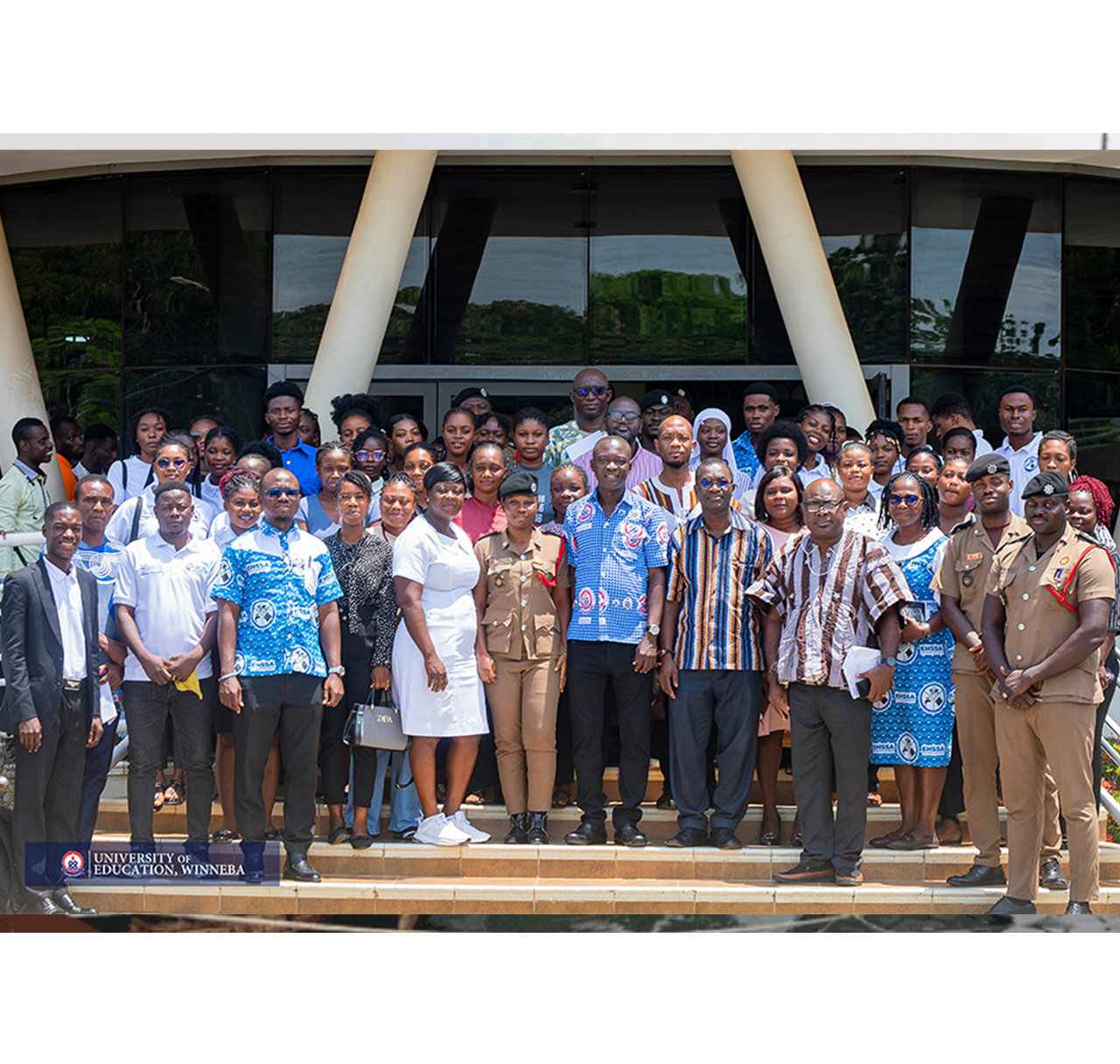
At a time when Ghana continues to grapple with fire outbreaks and poor waste management, the University of Education, Winneba is taking a decisive step—moving learning beyond theory into real-life action.
The Department of Environmental Health and Sanitation Education (DEHSE) has organised a timely seminar aimed at equipping students with practical skills in fire safety, emergency response, and sustainable waste management. But more importantly, the initiative is igniting a broader conversation: are we doing enough to protect lives and the environment?
Bridging the Gap Between Knowledge and Reality
Held under the theme “Bridging Theory and Practice,” the seminar brought together students, academics, and industry professionals to confront a critical challenge—Ghana’s persistent gap between what is taught in classrooms and what happens in real life.
For many institutions and communities, safety protocols exist on paper, but preparedness remains low.
According to Fred Yao Gbagbo, Dean of the Faculty, emergencies often expose this gap. Drawing from past experiences, he highlighted how panic and lack of preparedness can quickly turn manageable situations into disasters.
His message was clear: knowledge is only powerful when it is applied.
A Growing National Concern
Ghana continues to face recurring issues of:
- Fire outbreaks caused by electrical faults, gas leakages, and negligence
- Poor waste disposal practices threatening public health
- Limited public awareness on environmental safety
Godfred Safo-Adu, Head of DEHSE, warned that these challenges are not isolated—they are interconnected threats affecting lives, property, and the environment.
Without deliberate action, the cost will continue to rise.
Why Waste Management Cannot Be Ignored
Improper waste handling, especially medical and hazardous waste, remains a silent danger.
Elias Botchway of Medical Waste Services Limited stressed that poor waste management leads to infections, environmental pollution, and long-term health risks.
His call to action is one that concerns everyone:
waste management is not a government responsibility alone—it is a shared duty.
Fire Safety: Prevention Over Reaction
From the Ghana National Fire Service, Assistant Divisional Officer Evans Titus Donkoh reinforced a critical point—fire safety must begin before the fire starts.
He identified key preventive measures:
- Regular maintenance of electrical systems
- Safe handling of gas cylinders
- Awareness and use of emergency exits
In a country where fire incidents often lead to devastating losses, prevention remains the most effective tool.
From Students to Change Agents
This seminar goes beyond academic training—it is shaping a new generation of advocates.
Students are being challenged to:
- Practice what they learn
- Educate their communities
- Champion environmental and safety awareness
Because real change will not come from policies alone—but from people who understand and act.
The Bigger Picture
The initiative by the University of Education, Winneba reflects a growing need for institutions to integrate practical training with academic work.
If replicated nationwide, such efforts could:
- Improve emergency preparedness
- Reduce environmental health risks
- Build a culture of safety and responsibility
CONCLUSION
Ghana does not lack knowledge—it lacks consistent application.
This seminar is a reminder that the difference between safety and disaster often lies in preparedness, awareness, and action.
The question now is simple:
Will we act on what we know—or wait for the next crisis to remind us?