


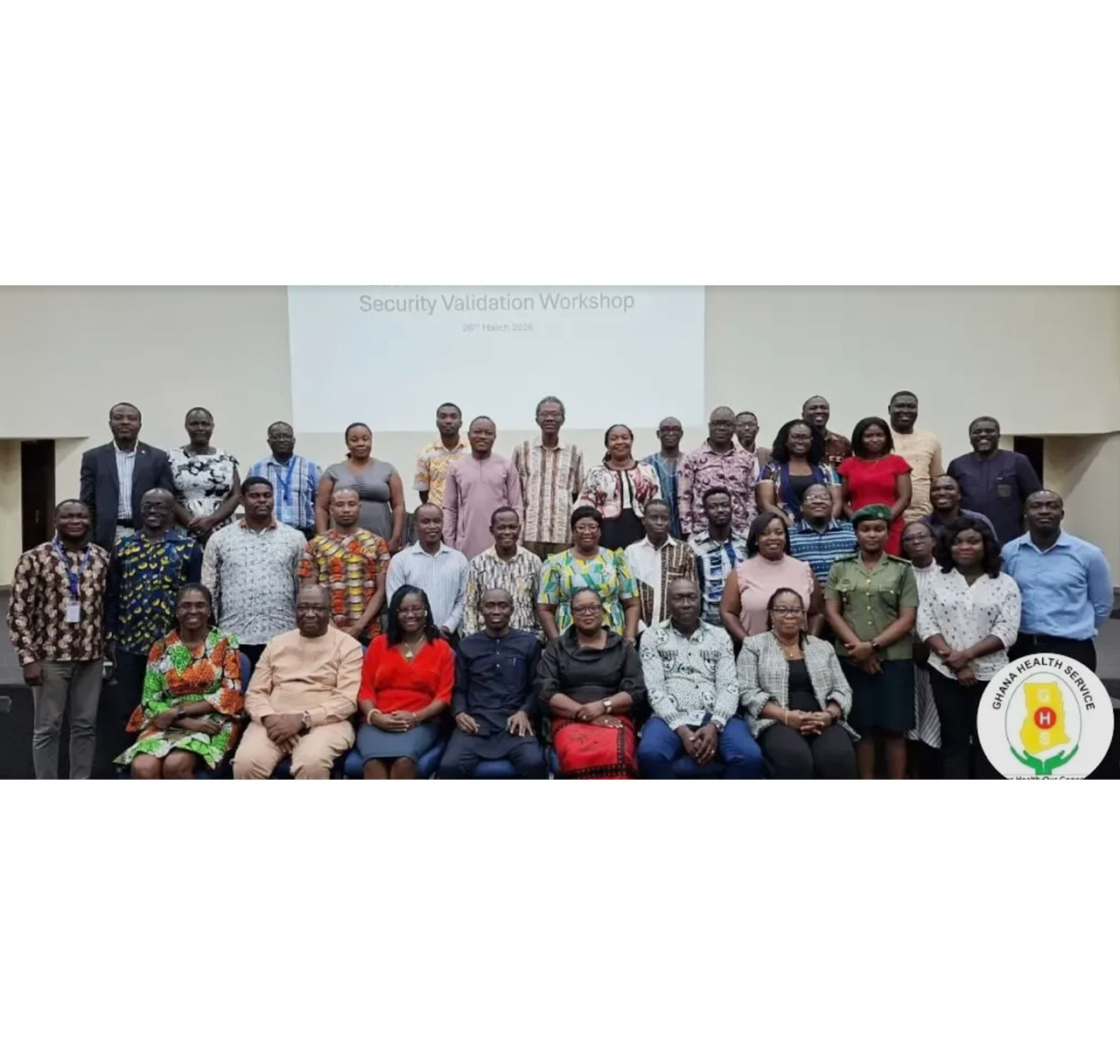
Ghana is taking a bold step toward safeguarding public health as the Ghana Health Service convenes a high-level national validation workshop to finalize its National Action Plan for Health Security (NAPHS) 2026–2031.
The workshop, held on March 27, 2026, brings together key stakeholders from government ministries, departments and agencies, academia, civil society, and development partners. Their mission is to review and validate priority interventions and ensure the plan reflects a unified, evidence-based approach to protecting the health of all Ghanaians.
Speaking on behalf of the Director-General, Dr. Franklin Asiedu Bekoe, Director of the Public Health Division, emphasized that the new plan builds on the successes of the previous NAPHS (2019–2023), which provided a strong foundation for coordinated national response to health threats.
He highlighted major gains achieved under the first plan, including the establishment of a National Public Health Emergency Operations Centre, expansion of surveillance systems, improved preparedness at points of entry, strengthened laboratory capacity, and the development of key national policies on antimicrobial resistance and food safety.
Ghana’s health systems, he noted, have been tested in recent years by multiple public health emergencies, including the COVID-19 pandemic, cholera, dengue fever, Lassa fever, mpox, yellow fever, meningitis, and recurrent measles outbreaks. Environmental emergencies such as flooding and chemical incidents have further underscored the need for a more resilient and responsive health security framework.
The new NAPHS adopts a One Health and all-hazards approach, recognizing the critical connection between human, animal, and environmental health, while also addressing cross-border health risks. It aligns with global standards, particularly the World Health Organization’s International Health Regulations, following Ghana’s Joint External Evaluation conducted in 2025.
Backed by multiple assessments—including simulation exercises, after-action reviews, and national risk analyses—the plan outlines 203 strategic priority actions and 129 operational actions to be implemented over the next five years. Notably, it integrates climate change considerations, positioning Ghana to respond proactively to emerging health threats linked to environmental changes.
This validation workshop is more than a technical exercise—it is a call to action. By fostering collaboration, strengthening national ownership, and building consensus, Ghana is laying the groundwork for a safer, healthier future.
As the country moves toward finalizing the NAPHS 2026–2031, the message is clear: health security is a shared responsibility, and sustained commitment from all sectors is essential to protect lives, livelihoods, and national development.