
Health authorities in Ghana are calling for a reset in how public health information is communicated, warning that lives are being put at risk not just by disease—but by gaps in knowledge.
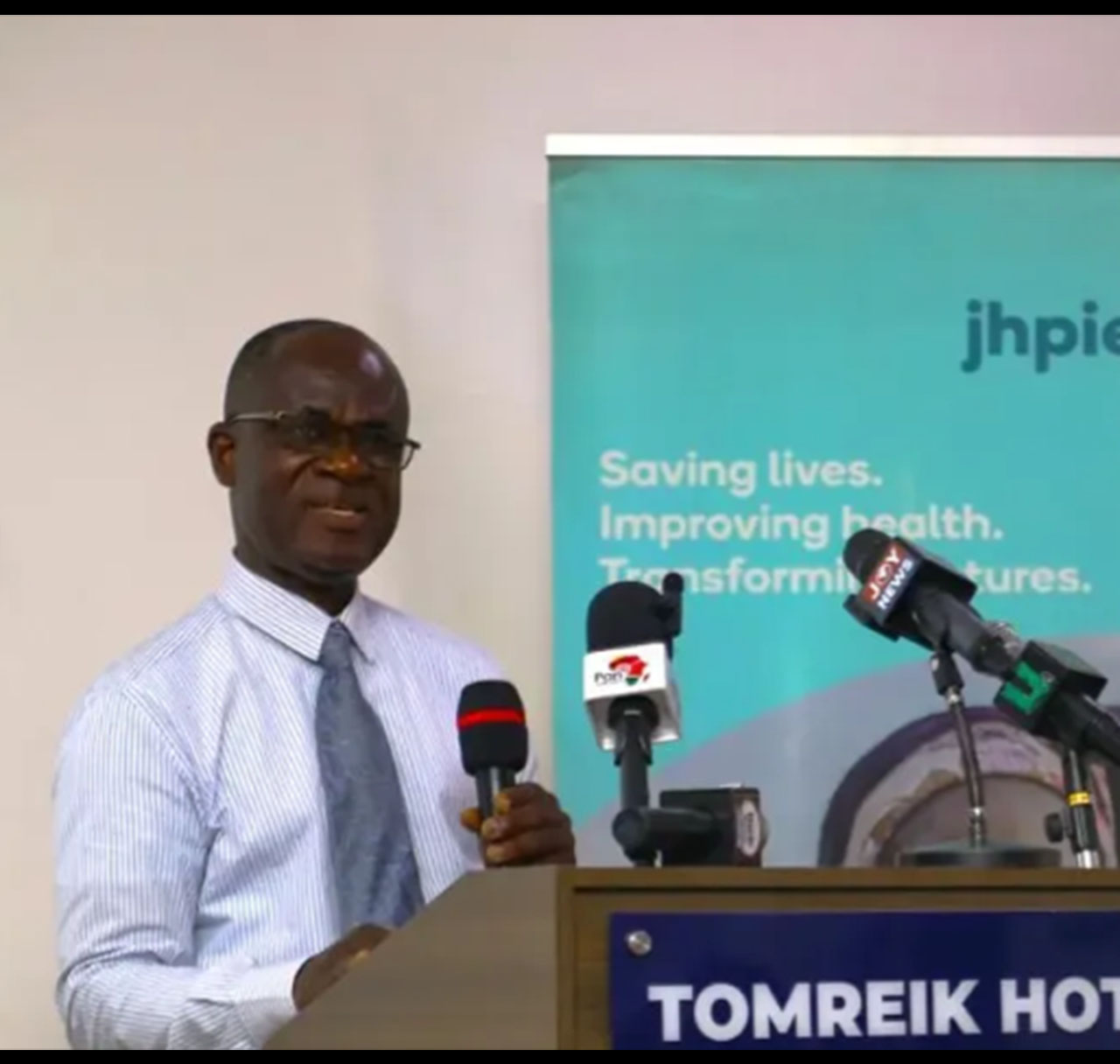
At a high-level media exchange in Accra, the Acting Greater Accra Regional Director of Health Services, Dr. Robert Amesiya, made a compelling case for a stronger alliance between the media and the health sector to drive responsible health promotion and improve outcomes.
The Real Barrier: Not Access, But Awareness
Despite years of investment in infrastructure, workforce development and community health systems by the Ghana Health Service, many Ghanaians still struggle to access care—not because services don’t exist, but because they don’t know where to go or what to do.
“There is still a huge gap in true knowledge,” Dr. Amesiya stressed, pointing to misinformation and limited awareness as silent barriers to healthcare.
For an advocacy community, the message is clear: health systems cannot succeed if people are left uninformed.
Media as a Lifeline, Not a Bystander
The engagement—organised by Jhpiego Ghana in collaboration with GHS—placed the media at the centre of the solution.
Dr. Amesiya challenged journalists to go beyond reporting events and become active drivers of behaviour change—using credible, accurate and actionable information to guide public decisions.
In a region as complex as Greater Accra, with over 1,900 diverse communities, a one-size-fits-all communication strategy simply will not work.
“Communication must be tailored. What works in one community may fail in another,” he noted.
The Cost of Misinformation
Health experts warn that misinformation—especially in the age of social media—is undermining progress in key areas such as maternal health, vaccination, sanitation and disease prevention.
Dr. Pearl Nanka Bruce emphasised that even the most effective health interventions can fail if communities do not trust or understand the information they receive.
She described the media as the critical bridge between technical health solutions and the people they are meant to serve.
“With radio, digital platforms and social media, we have the power to reach people everywhere—but that power must be used responsibly,” she said.
A Call for Responsible Health Journalism
The meeting ended with a clear call to action:
- Journalists must prioritise accuracy over speed
- Media houses must invest in health reporting capacity
- Health authorities must remain transparent and accessible
- Partnerships must move from occasional engagement to sustained collaboration
Dr. Amesiya assured journalists that the Regional Health Directorate is ready to support with verified data and expert guidance—urging the media to rely on credible sources to counter misinformation.
Why This Matters Now
From disease outbreaks to chronic conditions, Ghana’s public health challenges require not just medical solutions—but informed citizens.
Advocates argue that empowering people with the right information could:
- Increase early healthcare seeking
- Improve adherence to treatment
- Boost preventive behaviours
- Ultimately save lives
The Bottom Line
The fight for better health in Ghana is no longer just in hospitals and clinics—it is in newsrooms, radio studios and digital platforms.
As stakeholders deepen collaboration, one truth stands out: information is power—and responsible media could be the difference between life and death.