

Ghana’s fisheries sector is at a critical crossroads—pressured by climate change, declining fish stocks, and evolving marine conditions that threaten livelihoods along the coast.
In response, a team from the University of Education Winneba is advancing a practical, research-driven solution that could reshape the future of the sector: the Climate-Fishing Model School (C-FMS) initiative.
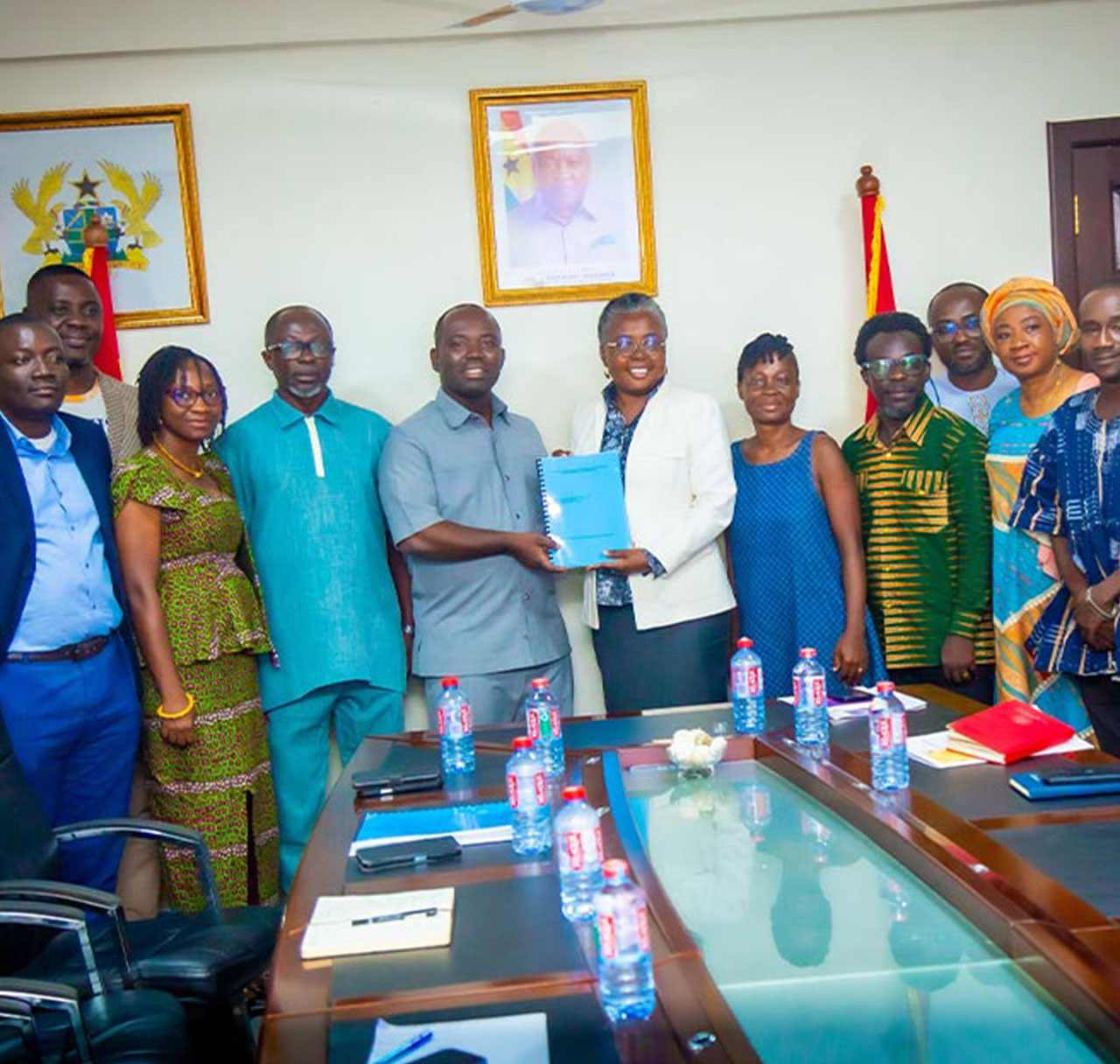
Presented to the Ministry of Fisheries and Aquaculture on 29th April 2026, the initiative is more than an academic proposal. It is a call to rethink how knowledge is delivered to the very people who depend on the sea for survival.
Led by Victor Owusu, the project recognises a hard truth—while Ghana’s artisanal fisheries remain economically vital, many fishing communities still rely heavily on traditional knowledge systems that are increasingly challenged by climate variability and environmental degradation.
The fisheries sector employs an estimated three million people and contributes over 4% to Ghana’s GDP, while also providing more than 60% of the population’s primary protein source. Yet the systems supporting it have not evolved at the same pace as the challenges it faces.
The Climate-Fishing Model School seeks to change that.
Designed as a community-based adult learning platform, the initiative brings together canoe owners, fish processors, traders, and chief fishermen to share experiences while gaining practical training in sustainable fishing practices, climate adaptation, and modern marine management.
A successful pilot conducted in Axim in 2023 demonstrated its impact. Fisherfolk from Brewire and Amanfumkumanu participated in intensive training sessions, working with institutions such as the Fisheries Commission and the Ghana Meteorological Agency.
The results were significant.
Participants developed a stronger understanding of climate change and fisheries regulations, including compliance with closed fishing seasons. They also began using weather forecasting tools and mobile-based systems to better understand sea conditions—an innovation that directly improves safety and productivity at sea.
Importantly, the programme also changed perceptions. Many fishers who previously viewed aquaculture as complicated and costly began to see it as a practical alternative livelihood when supported with the right training.
Beyond technical skills, the initiative strengthened financial literacy, encouraging better income management during peak fishing seasons.
These outcomes make a strong case for expansion.
The UEW team is now seeking government support to scale the initiative to eight coastal communities across four regions, while also developing a structured training framework for facilitators, including teachers and fisheries extension officers.
The engagement with the Ministry of Fisheries and Aquaculture was met with strong interest from government.
Minister Emelia Arthur commended the initiative and highlighted opportunities for collaboration with the soon-to-be-transformed Ghana National Institute of Fisheries, which is evolving from the Anomabo Fisheries College.
Her remarks point to a crucial policy opening: the alignment of academic innovation with national fisheries training infrastructure.
However, for this initiative to move beyond discussion, it requires deliberate state backing.
The Climate-Fishing Model School represents exactly the kind of intervention Ghana needs—one that connects science with indigenous knowledge, policy with practice, and research with real community transformation.
It also reflects a broader truth: sustainable fisheries management cannot be achieved through regulation alone. It must be driven by education, awareness, and continuous community engagement.
As the Minister rightly noted, marine sustainability begins with understanding that the sea responds to human behaviour. What is taken from it must be matched with responsibility in return.
The University of Education Winneba has positioned itself as more than a teacher education institution. Through this initiative, it is demonstrating how universities can directly contribute to national development challenges.
What remains now is for government and stakeholders to move from interest to implementation.
If scaled effectively, the Climate-Fishing Model School could become a national blueprint for climate-resilient fisheries education—one that protects livelihoods, strengthens food security, and ensures the long-term sustainability of Ghana’s blue economy.